


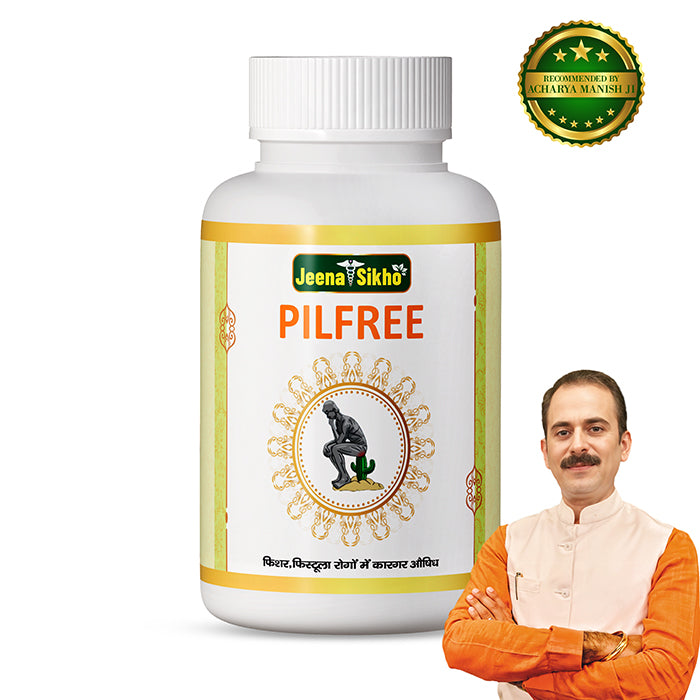
Pilfree Capsules | Ayurvedic Support for Piles, Fistula & Fissure


Triphala Guggul Tablets | Supports Piles, Eases Discomfort & Pain, Promotes Digestion, Gut & Bowel Health


Sitz Bath Powder | Ayurvedic Powder for Piles, Fissures & Intimate Comfort
Best Ayurvedic Medicine for Piles (Bawasir/Arsha) - Natural Piles Treatment Without Surgery
Piles is one of India’s most common yet under-discussed health conditions, and finding the right ayurvedic medicine for piles can often feel confusing. It is estimated that nearly 75% of people experience it at some point, often starting as mild discomfort but gradually turning into the painful hemorrhoids that affect daily routine, sitting, and even simple bowel movements if ignored.
In India, piles is commonly called bawasir (बवासीर), but people still avoid talking about it openly. Whether it is internal piles, external hemorrhoids, or bleeding bawasir (khuni bawasir), the discomfort can be difficult to manage. Choosing the best medicine for piles (bawasir ki dawa), especially the right ayurvedic medicine for piles, becomes important for proper piles treatment, not just temporary support.
Whether you are dealing with internal piles, external hemorrhoids, or burning and swelling during a flare, Jeena Sikho’s Ayurvedic Piles Care collection brings together traditional Arsha Chikitsa principles. From Pilfree Capsules and Triphala Guggul Tablets to soothing Sitz Bath Powder and fast-acting JS-Pylocare Drops, this range works in a way that focuses on the root of the condition, not just what shows on the surface.
What is Piles (Bawasir / Arsha)? - Definition, Types & How They Look
Piles (also called hemorrhoids or bawasir in Hindi) are swollen, inflamed veins in the rectum and anus — similar to the varicose veins. They occur when blood vessels around the rectal area are under increased pressure due to straining, constipation, pregnancy, or the low-fibre diet. Piles can be internal (inside the rectum) or external (under the skin around the anus) and range from mildly uncomfortable to the severely painful.
If you’re wondering what is piles or piles meaning in Hindi, it is commonly called bawasir (बवासीर), while in Ayurveda it is known as Arsha. In different regions, people also search for piles meaning in Marathi/Tamil/Telugu/Kannada (known as Mulvyadh in Marathi, Moolam in Tamil, Molalu in Telugu, and Mulavyadhi in Kannada), but all these refer to the same condition. Many people also search what is bawasir or bawasir kya hota hai. Piles vs hemorrhoids is not a difference — both are medically identical, just different names used in different regions.
Types of Piles (Hemorrhoids)
There are different types of piles based on their location and the severity. Internal piles develop inside the rectum and are usually painless, but may cause the bleeding. External hemorrhoids occur around the anus and can lead to the pain, irritation, or swelling. In some cases, the piles may bleed (khuni bawasir) or become thrombosed, where a clot forms, causing the severe pain. Advanced cases may appear outside the anus, which explains how piles look like in later stages.
In simple terms, knowing the hemorrhoids meaning and its types helps in spotting symptoms early and deciding the right way to manage the condition.
Piles Types Table:
|
Type |
Where It Forms |
How It Looks / Feels |
Grades / Severity |
Ayurvedic Name |
Treatment |
|
Internal Piles |
Inside the rectum — not visible from outside |
Usually painless — detected by bleeding on toilet paper or in toilet bowl; may prolapse outward in later grades |
Grade 1-4 (Grade 4 = permanently prolapsed) |
Antarbhava Arsha — internal origin |
Pilfree Capsules + Triphala Guggul + dietary changes |
|
External Piles |
Under the skin around the outside of the anus |
Visible lump near anus; painful, itchy, or burning — especially after bowel movement |
Mild to thrombosed (blood clot inside) |
Bahirbhava Arsha — external origin |
Sitz Bath Powder (topical) + JS-Pylocare Drops + Pilfree Capsules |
|
Bleeding Piles (Khuni Bawasir) |
Can be internal or external |
Bright red blood on toilet paper, in bowl, or on stool — during or after bowel movement |
Indicates Grade 2+ internal or traumatized external |
Raktarsha — blood-type Arsha in Charaka Samhita |
Pilfree Capsules + Triphala Guggul + immediate diet change |
|
Thrombosed Piles |
External — blood clot forms inside |
Sudden severe pain, hard blue-purple lump near anus — very tender to touch |
Acute condition — requires rapid attention |
Sushka Arsha with Rakta Sanga — dry type with blood accumulation |
Sitz Bath Powder (immediate support) + JS-Pylocare Drops + consult doctor |
|
Prolapsed Piles |
Internal piles that push through the anus |
Tissue visible outside — pink, soft, mucus-covered; Grade 3 = manually reducible; Grade 4 = cannot be pushed back |
Grade 3-4 — advanced stage |
Bahirnirgatarsha — protruding Arsha |
Pilfree Capsules + Triphala Guggul + surgical evaluation for Grade 4 |
Piles Symptoms (Bawasir Ke Lakshan) — Internal, External, Bleeding & Female Piles Signs
Symptoms of piles include: bright red blood after bowel movement, pain or discomfort around the anus, itching or irritation in the anal region, swelling around the anus, a lump near the anus (which may be sensitive or painful), leakage of faeces, and a feeling that the bowels are not fully empty after passing stool. Internal piles are often painless but bleed; external piles are more likely to cause pain.
10 Symptoms of Piles
- Bright Red Bleeding — You may notice blood on toilet paper, in the toilet bowl, or coating the stool. It is usually painless in internal piles but can be painful in external ones. In Ayurveda, this is called Rakta Srava, a key Arsha symptom.
- Pain or Discomfort Around the Anus — A dull ache, throbbing, or sharp pain, especially during or after the bowel movements. This is often more intense in the thrombosed or the external piles.
- Itching and Irritation (Kandu) — A frequent or occasional urge to itch around the anal region, usually caused by mucus discharge disturbing the surrounding skin. Ayurveda refers to this as the Kandu.
- Swelling Around the Anus — A noticeable swelling or a lump near the anus, which may feel soft or slightly tender. Common in the external or the prolapsed piles.
- Feeling of Incomplete Evacuation — After passing the stool, many people still feel like the bowels haven’t cleared properly, a common sign seen with internal piles.
- Mucus Discharge — A sticky or slippery fluid seen after a bowel movement or on the underwear, caused by the internal piles releasing the mucus.
- Prolapse — The internal piles may push out of the anus during the straining. In the early stages, they go back inside, but in the advanced cases, they may remain outside.
- Constipation and Straining — The straining during the bowel movement can both cause and worsen the piles, creating a cycle that becomes difficult to break.
- Anal Sensitivity and Tenderness — The area around the anus may become highly sensitive, making the sitting or even the gentle cleaning uncomfortable.
- Foul Odour or Soiling — The leakage of the mucus or the stool can lead to the odour and the staining, which may affect the daily comfort and the confidence.
These pile symptoms in Hindi are commonly described as bawasir ke lakshan, and they may vary in the severity depending on the stage. The hemorrhoids symptoms can be different for each person, but the early signs are often ignored. Piles symptoms for male and females are largely similar, though lifestyle and hormonal factors may influence how they appear.
Piles Symptoms in Females
Women experience piles more frequently than commonly acknowledged — especially during pregnancy (increased pelvic pressure + constipation), postpartum (pushing during labour), and during menstruation (hormonal changes increase rectal vascular pressure). Female-specific symptoms to watch: piles that develop rapidly during the third trimester, rectal bleeding that may be confused with menstrual bleeding, and pain during intercourse if external piles are present near the vaginal area. Postpartum piles often resolve within weeks but may need Sitz Bath Powder for comfort during recovery.
What Causes Piles (Bawasir Kyu Hota Hai)? — Root Causes, Risk Factors & Ayurvedic Nidana
Understanding piles causes makes it easier to manage the condition and stop it from getting worse over time. If you’re wondering what causes piles (bawasir kyu hota hai ya bawasir kaise hota hai), the reason is often linked to rising pressure in the rectal area over time.
One of the most common reasons for piles is the chronic constipation and straining during the bowel movements. A low-fibre diet, lack of water intake, and irregular eating habits are often the main reasons for piles in many people. Prolonged sitting, especially during the desk work or spending too much time on the toilet, also adds pressure to the rectal veins.
Other factors include pregnancy, obesity, and heavy lifting, all of which increase the abdominal pressure and contribute to the reasons for piles (bawasir hone ke karan). Hormonal changes and the poor gut health may also play a role in why piles occur, especially in women.
There are also specific causes of piles in male patients, including heavy weightlifting, alcohol consumption, and a sedentary lifestyle. Overall, whether someone searches for why piles occur (bawasir kyu hota hai) or looks into the causes, most triggers are linked to daily habits that can be improved over time.
|
Root Cause |
Modern Medicine Explanation |
Ayurvedic Nidana (Root Cause) |
India Prevalence |
Prevention Action |
|
Chronic Constipation & Straining |
Repeated straining increases rectal venous pressure — dilating and weakening rectal blood vessels |
Vibandha (constipation) causing Apana Vata disturbance — primary Ayurvedic Arsha cause |
Extremely high — Indian diet is low-fibre; 30-40% of adults have chronic constipation |
High-fibre diet, warm water, Triphala daily |
|
Low-Fibre Diet |
Hard, dry stool requires straining — the #1 modifiable cause of piles |
Ruksha Ahara (dry food) aggravating Vata, causing Vibandha |
Urban Indian diet lacks adequate vegetables, fruits, and whole grains |
30g fibre daily: vegetables, fruits, millets, legumes |
|
Prolonged Sitting (Desk work, Toilet) |
Long periods on the toilet reading or on phones + extended desk work increase rectal pressure |
Asana (excessive sitting) — specifically cited as Arsha Nidana in Charaka Samhita |
Very high — urban India's sitting epidemic + habit of reading on phone on toilet |
Limit toilet time to under 5 minutes; take walking breaks every 45 minutes |
|
Pregnancy |
Growing uterus compresses pelvic veins; constipation + progesterone relax blood vessel walls |
Garbhini Avastha — pregnancy pressure on Apana Vata and pelvic Srotas |
Extremely common — 25-35% of pregnant women develop piles |
High-fibre diet + Sitz Bath Powder during pregnancy (topical — safe) |
|
Obesity |
Excess abdominal and rectal pressure on rectal veins |
Medoroga — excess fat tissue increasing intra-abdominal pressure |
Rapidly increasing — urban India's obesity epidemic |
Weight management + daily walking reduces rectal venous pressure |
|
Chronic Diarrhoea |
Repeated irritation and inflammation of rectal lining |
Atisara (diarrhoea) causing Pitta aggravation in lower gut |
Common — food hygiene issues, IBS |
Treat root cause; Kutaj herb for IBS-related diarrhoea |
|
Heavy Lifting |
Sudden increase in intra-abdominal pressure dilates rectal veins |
Guru Bhara Vahana — carrying heavy loads cited in Arsha Nidana |
Common in manual labourers, athletes (weightlifters) |
Correct form; avoid Valsalva manoeuvre (breath-holding during lifting) |
|
Genetics / Family History |
Weak rectal vein walls may be hereditary |
Sahaja (genetic) component — constitutional Kapha-Pitta Prakriti increases susceptibility |
Significant — if both parents have piles, risk increases substantially |
Cannot change genetics; manage modifiable causes aggressively |
Home Remedies for Piles (Bawasir ka Gharelu Ilaj) - Natural Treatment, Sitz Bath & Bleeding Piles Care
Simple home remedies for piles can help manage symptoms, reduce discomfort, and support better daily bowel habits. These are also commonly searched as home remedies for piles in Hindi and are widely used for piles treatment at home.
Warm Sitz Bath (Avagaha Sweda)
A warm sitz bath for piles (40°C) for 15–20 minutes, 2–3 times daily reduces swelling, relaxes muscles, and reduces pain. Adding Jeena Sikho’s Sitz Bath Powder enhances the effect, offering fast support for the internal and the external piles.
High-Fibre Diet Immediately
Switch to a high-fibre diet (30g/day). Add 1-2 teaspoons of Isabgol in warm water, fruits with skin, vegetables, millets, and legumes to soften the stool and reduce the straining, which supports the long-term piles treatment.
Cold Compress for External Piles
Apply a cloth-wrapped ice pack for 15 minutes to reduce swelling and pain. Avoid direct ice. Repeat 3–4 times daily to help support piles symptoms during flare-ups.
Warm Water + Isabgol Morning Protocol
Warm water with 1–2 tsp Isabgol on an empty stomach every morning softens stool, prevents straining, and supports those looking for how to get rid of piles naturally.
Witch Hazel or Aloe Vera (Topical)
Apply pure aloe vera gel to the anal area to cool burning and reduce swelling. In Ayurveda, Kumari (Aloe Vera) is known for its Pitta-pacifying, cooling, and anti-inflammatory effects.
Triphala Powder Warm Water (Night)
Take 1 teaspoon of Triphala powder with warm water at night. A classical Ayurvedic bowel regulator, it softens the stool, reduces Pitta, and supports piles by relieving the constipation linked to the piles.
Avoid Prolonged Toilet Time
Limit toilet time to 5 minutes. Avoid phone or reading because prolonged sitting increases rectal pressure, worsens piles, and may lead to new piles developing.
Stay Hydrated
Stay hydrated with 2.5–3 litres daily. Dehydration causes hard stool and straining. Drinking 8–10 glasses of water helps prevent constipation-related piles.
Sitz Bath Protocol for Piles
A sitz bath involves soaking the anal area in warm water (38–40°C). You can add Jeena Sikho’s Sitz Bath Powder, which contains Kashaya (astringent) and Ropana (healing) herbs. Sit for 15–20 minutes, 2–3 times daily, then gently pat the area dry with a clean, soft cloth without rubbing.
Bleeding Piles (Khuni Bawasir) — Special Care
For the bleeding piles (Khuni Bawasir / Raktarsha), a careful and immediate approach is needed, especially when looking for treatment for bleeding piles (khuni bawasir ka ilaj).
Start by adding Triphala Guggul Tablets, which help reduce internal inflammation and control progressive bleeding.
Pilfree Capsules can also be used, as classical Arsha herbs which target the root cause.
Use a cool sitz bath (room temperature, not hot during active bleeding) to soothe the area. Avoid spicy food, alcohol, and straining, and increase fluid intake significantly.
IMPORTANT: If the bleeding is dark red, contains the clots, or comes with the abdominal pain, seek the medical help immediately. Bright red blood after the bowel movement usually indicates piles.
While these home remedies for piles can help manage the symptoms, the consistency matters. Small changes in the diet, hydration, and the routine habits can make a difference over time. If the symptoms persist, proper piles treatment may be required, as Ayurveda works on the root cause.
Ayurvedic Science of Piles — Arsha, Tridosha & the Kshar Karma Framework
In Ayurveda, piles are known as 'Arsha', a term that literally means “a condition that troubles like an enemy". Classical texts such as the Charaka Samhita (Chikitsa Sthana, Chapter 14) explain this condition in detail under Arsha Chikitsa. According to Ayurveda, it begins with the disturbance of Apana Vata along with Agni Mandya, meaning weak digestive fire, which together disturb the proper bowel movement and lead to the piles.
Ayurveda explains the Trividha Arsha as two main forms—Sahaja (present from birth) and Janmottara (developed later due to diet and lifestyle habits). Most cases come under Janmottara, meaning they can often be prevented and managed with the right approach. The classical treatment framework includes four pillars—Bheshaja (herbal medicine, including Pilfree Capsules and Triphala Guggul), Kshara Karma (cauterisation—a classical clinical procedure), Agni Karma (heat therapy), and Shastra Karma (surgical intervention, mainly for the Grade 4 cases). Jeena Sikho’s approach focuses on the first pillar, Bheshaja Chikitsa, which is considered most suitable for Grades 1–3. For early stages, piles treatment in Ayurveda mainly relies on this approach, using the Ayurvedic medicine for piles as part of a structured routine.
From a dosha point of view, piles are usually seen as Vataja, Pittaja, and Kaphaja types. Vataja Arsha tends to be dry, hard, and painful; Pittaja Arsha shows up with bleeding and a burning feeling (Raktarsha); while Kaphaja Arsha appears soft, swollen, and itchy. Identifying the type helps in choosing suitable herbs and Ayurvedic tablets for piles.
A key concept in Ayurveda is the role of Apana Vata, a sub-type of Vata located in the lower abdomen and pelvic region. It is responsible for the downward movements in the body, like bowel movements, urination, and even menstruation. When Apana Vata gets disturbed due to long-term constipation, an improper diet, or too much sitting, the natural elimination process starts getting affected. This imbalance is seen as one of the main causes of Arsha (piles) in Ayurveda. When Apana Vata doesn’t work properly, pressure slowly builds in the rectal area, which can lead to swollen veins. This is why piles are not just a local issue but linked to a deeper imbalance.
Best Ayurvedic Piles Medicine at Jeena Sikho (Piles ki Dava / Bawasir Ki Dawa) – All Products
The choice of piles medicine can vary depending on the type of piles and the discomfort involved. In Ayurveda, a combination approach is usually followed—internal support with the ayurvedic medicine for piles (bawasir ki dawa) along with external care. Jeena Sikho’s range offers a structured solution using piles tablet, piles syrup, and topical support for complete piles care.
Pilfree Capsules — Ayurvedic Support for Piles, Fistula & Fissure
Pilfree Capsules are considered among the best medicine for piles options in Ayurveda, formulated to support piles (Arsha), fistula (Bhagandara), and fissure (Parikartika). With classical herbs like Triphala, Nagkesar, Kutaj, and Haritaki, they work on the root cause—Apana Vata disturbance and Agni Mandya. Suitable for Grade 1–3 internal and external piles, a minimum 90-day protocol is generally followed for sustained results.
Triphala Guggul Tablets — Eases Piles Discomfort & Pain
This is a classical ayurvedic tablet for piles combining Triphala, known for regulating bowel movements, with Guggul, a well-known anti-inflammatory Rasayana. It helps reduce the piles inflammation, supports digestion, and gradually works on the swollen hemorrhoidal tissue. This Arsha Chikitsa formulation is traditionally referenced from Ashtanga Hridayam and is often considered when pain, constipation, and inflammation occur together.
Sitz Bath Powder — Ayurvedic Topical Piles & Fissure Support
Sitz Bath Powder is used externally in warm sitz baths, delivering the Kashaya (astringent) and Ropana (healing) herbs directly to the affected area. It works to settle the swelling in external piles, reduces the uneasiness caused by fissures, and brings some comfort from post-bowel burning and itching. It is commonly used for the external piles and post-procedure care.
JS-Pylocare Drops — Hemorrhoid Comfort for Burning & Swelling
JS-Pylocare Drops are a liquid formulation designed for quicker comfort during the acute symptoms like burning, swelling, and discomfort. Its oral or sublingual use supports the faster absorption and may provide comfort during the flare-ups as Pilfree Capsules and Triphala Guggul continue their long-term healing action.
4 Products — Quick Reference Table:
|
Product |
Form |
Primary Action |
Best For |
Use With |
URL |
|
Pilfree Capsules |
Capsule |
Internal healing — piles, fistula, fissure — root cause treatment |
Grade 1-3 internal/external piles; fistula; fissure |
Triphala Guggul Tablets + dietary changes |
/products/pilfree-capsules |
|
Triphala Guggul Tablets |
Tablet |
Anti-inflammatory + bowel regulation — classical Arsha formula |
Pain, inflammation, constipation-driven piles; bleeding piles |
Pilfree Capsules + high-fibre diet |
/products/triphala-guggul-tablets |
|
Sitz Bath Powder |
Topical Powder |
External support — swelling, burning, itching — sitz bath application |
External piles, thrombosed piles, fissures, post-bowel burning |
Pilfree Capsules (internal) + Sitz Bath Powder (external) combo |
/products/sitz-bath-powder-piles-fissures-care |
|
JS-Pylocare Drops |
Liquid Drops |
Acute symptom support — burning, swelling, hemorrhoid discomfort |
Acute piles flare; quick support while long-term herbs build effect |
Any of the above for comprehensive care |
/products/js-pylocare-drops |
Internal Link Map:
|
Anchor Text |
Link |
Placement Block |
|
Pilfree Capsules |
/products/pilfree-capsules |
Block 7 + Block 5 (bleeding piles) + FAQ Q11 |
|
Triphala Guggul Tablets |
/products/triphala-guggul-tablets |
Block 7 + Block 8 (Triphala herb) + FAQ Q12 |
|
Sitz Bath Powder |
/products/sitz-bath-powder-piles-fissures-care |
Block 5 (sitz bath H3) + Block 7 + FAQ Q13 |
|
JS-Pylocare Drops |
/products/js-pylocare-drops |
Block 7 + Block 3 (symptoms — burning) + FAQ Q14 |
|
Liver Care Collection |
/collections/liver-care |
Block 6 (Triphala herb cross-mention) |
|
Juice Collection |
/collections/juice |
Block 9 (juice for constipation cross-mention) |
Ayurvedic Herbs for Piles & Yoga Asanas For Hemorrhoid Support
Ayurveda combines the use of time-tested herbs with simple yoga practices to support piles care and improve digestive balance naturally.
Piles Herb Reference Table:
|
Herb |
Ayurvedic Name / Botanical |
Key Action for Piles |
Dosha Effect |
Classical Reference |
Found In Product |
|
Triphala (Amla + Bibhitaki + Haritaki) |
Trayushana — classical compound |
The most important Ayurvedic bowel regulator — softens stool, reduces Apana Vata, anti-inflammatory for rectal tissue, reduces Ama |
Balances all three doshas — Tridoshic |
Charaka Samhita — primary Arsha Chikitsa herb group |
Triphala Guggul Tablets |
|
Guggul |
Commiphora mukul / Guggulu |
Potent anti-inflammatory + analgesic — reduces piles swelling, shrinks hemorrhoidal tissue, reduces rectal venous inflammation |
Pacifies Vata-Kapha |
Ashtanga Hridayam — Arsha + Medoroga treatment |
Triphala Guggul Tablets |
|
Nagkesar |
Mesua ferrea / Nagakesara |
Classical Raktarsha herb — astringent action on bleeding piles; stops bleeding, strengthens rectal mucosa, reduces Pitta in Rakta |
Pacifies Pitta-Kapha |
Charaka Samhita — Raktarsha Chikitsa (bleeding piles treatment) |
Pilfree Capsules |
|
Kutaj |
Holarrhena antidysenterica / Kutaja |
Anti-diarrhoeal + anti-inflammatory — specifically for piles associated with loose stools or chronic diarrhoea; astringent |
Pacifies Pitta-Kapha |
Charaka Samhita — Arsha + Atisara (diarrhoea) Chikitsa |
Pilfree Capsules |
|
Haritaki |
Terminalia chebula / Pathya |
'Best friend of the rectum' — classical Ayurvedic term. Regulates bowel, anti-inflammatory, rejuvenating for rectal tissue |
Pacifies all three doshas |
Charaka Samhita — Arsha Chikitsa + Rasayana chapter |
Pilfree Capsules |
|
Neem (Nimba) |
Azadirachta indica |
Anti-microbial + anti-inflammatory + wound-healing — for infected or inflamed external piles and fissures |
Pacifies Pitta-Kapha |
Classical Arsha topical application herbs |
Sitz Bath Powder |
|
Turmeric (Haldi) |
Curcuma longa / Haridra |
Curcumin reduces local inflammation, antibacterial for secondary infection, wound healing — both internal and topical |
Pacifies Pitta |
Classical Arsha Chikitsa — Lepa (topical) applications |
Sitz Bath Powder |
|
Aloe Vera (Kumari) |
Aloe barbadensis / Kumari |
Cooling, anti-inflammatory, wound-healing — for external application on piles and fissures; internally soothes rectal irritation |
Pacifies Pitta |
Classical Arsha topical + internal use |
Sitz Bath Powder |
Triphala (Amla + Bibhitaki + Haritaki)
Triphala for piles is considered one of the most important Ayurvedic formulations for bowel regulation. It helps soften stool, reduce strain, and support Apana Vata balance. Its anti-inflammatory action also supports rectal tissue health and helps reduce Ama, making it useful in long-term piles care.
Guggul
Guggul for piles is known for its strong anti-inflammatory and the analgesic properties. It helps reduce swelling, discomfort, and the rectal venous inflammation. Over time, it may support the reduction of enlarged hemorrhoidal tissue, especially in Vata-Kapha dominant conditions.
Nagkesar
Nagkesar for piles is traditionally used in bleeding piles, especially Raktarsha. Its astringent action helps control bleeding and supports the strength of rectal mucosa. It is commonly considered in Pitta-related piles conditions.
Kutaj
Kutaj is used in cases where piles are associated with loose stools or chronic diarrhoea. It has anti-diarrhoeal and anti-inflammatory properties, helping stabilise bowel movements while reducing irritation in the rectal region.
Haritaki
Haritaki is often called the “best friend of the rectum” in Ayurveda. It supports regular bowel movement, reduces inflammation, and helps rejuvenate the rectal tissue. It is suitable for maintaining long-term digestive balance.
Neem (Nimba)
Neem has anti-microbial and wound-healing properties. It is commonly used externally for piles and fissures that are infected or inflamed, helping in reducing the irritation and slowly supporting healing.
Turmeric (Haldi)
Turmeric contains curcumin, which helps reduce local inflammation and supports healing. It also has antibacterial properties, making it useful in preventing secondary infections in piles and fissure conditions.
Aloe Vera (Kumari)
Aloe Vera provides a cooling and soothing effect, especially in external piles and fissures. It supports wound healing and helps reduce irritation, while internally it may soothe rectal inflammation linked with Pitta imbalance.
Best Yoga Asanas for Piles
- Ashwini Mudra (Horse Gesture) — This practice involves rhythmic contraction and release of the anal sphincter muscle. It helps improve blood circulation in the rectal area and also strengthens the pelvic floor. It reduces venous congestion too. 20–30 contractions x 3 sets daily — one of the most important yoga practices for piles.
- Mula Bandha (Root Lock) — In this practice, you gently hold the pelvic floor in a sustained contraction. It helps stimulate the Apana Vata and reduces the congestion in the rectal blood vessels. Over time, it also supports strengthening the pelvic region.
- Viparita Karani (Legs-Up-the-Wall Pose) — This is a simple posture where the legs are kept raised. It helps reduce the pressure in the rectal area and allows better blood flow away from it. Because of this, swelling and congestion may reduce gradually. You can hold it for around 5–10 minutes daily.
- Pavanamuktasana (Wind-Relieving Pose) — This pose helps release the trapped gas and gently massage the colon. It supports digestion and may help reduce the constipation, which is one of the common causes of piles.
- Sarvangasana (Shoulder Stand) — It is an inverted pose that helps in reversing the rectal venous pressure and supports better circulation. In Ayurveda, it is seen as a useful yoga for Arsha, but should be avoided if there is active bleeding or in Grade 4 piles.
- Balasana (Child's Pose) — A calm and simple pose that gives mild abdominal compression with pelvic floor relaxation. It helps release the Apana Vata congestion and also reduces the tension in the rectal area.
Daily Lifestyle Habits to Support Piles Care
• Stay hydrated throughout the day, it helps in keeping the stools soft and easy to pass.
• Include more fibre in your diet so digestion does not feel heavy or stuck.
• Sitting continuously for a long time should be avoided, it adds pressure below.
• A bit of daily movement like walking can help your system stay active.
• Going to the toilet at the same time daily can reduce unnecessary strain.
• Don’t hold in urges, it may disturb normal bowel habits.
Diet for Piles (Bawasir Me Kya Khaye) - Best Foods, Foods to Avoid & 7 Day Piles Diet
Managing piles usually starts with the right diet, because constipation and hard stools are some of the most common triggers. If you are wondering what to eat during piles (Bawasir Me Kya Khaye), try focusing on the foods that help smooth bowel movement and better digestion. Many people also search for piles support in 3 days food or the quick piles treatment food options, but real support comes with consistency. Some of the best piles food to eat include simple, fibre-rich and easy-to-digest foods.
- Isabgol (Psyllium Husk) — Often considered the most important dietary addition for piles. Taking 1–2 teaspoons in warm water in the morning and at night provides soluble fibre that softens stools without causing excessive gas. In Ayurveda, it is valued for promoting gentle, non-irritating bowel movements.
- Papaya — It contains the digestive enzyme called papain that helps promote the soft stool formation. Its mild natural laxative action makes it a commonly recommended fruit for the people dealing with constipation and piles, and it is often considered one of the best food for piles options to include in the diet.
- Figs (Anjeer) — Soaked overnight and consumed in the morning, figs provide a combination of dietary fibre and the natural laxative properties that support the regular bowel movements.
- Leafy Greens (Palak, Methi, Sarson) — These vegetables are rich in fibre, iron, and magnesium and come under the best high fiber foods for piles. They help in improving the bowel regularity and also support the people who may feel weakness or iron loss from the bleeding piles.
- Moong Dal — One of the easiest dals to digest. It provides protein without causing the excessive gas or bloating, making it a suitable option for people with piles.
- Buttermilk (Takra) — Traditionally recommended after the meals in Ayurveda. It supports digestion, helps maintain gut balance, and may assist in stool softening without irritating the digestive tract.
- Cucumber, Bottle Gourd (Lauki), and Ridge Gourd —These vegetables have high water content and are easy to digest, so they are considered the good fiber rich foods for piles, helping in hydration and the smoother bowel movements.
- Warm Water on an Empty Stomach — Drinking a full glass of warm water first thing in the morning can help stimulate the natural bowel movement reflex and reduce constipation.
While adding the right foods in your diet is important, knowing the food to avoid in piles (Bawasir Me Kya Nahi Khana Chahiye) is also very important, as some foods can make constipation, bloating, irritation and discomfort worse. Some foods that are best limited or avoided include,
- Spicy Foods (Mirchi, Chilli, Hot Pickles) — may irritate the rectal area and can increase the burning or uneasiness in sensitive persons.
- Maida and Refined Flour Products (White Bread, Naan, Biscuits) — low fibre content and commonly linked with constipation and the hard stool formation.
- Red Meat — takes longer to digest, and it may slow bowel movement and increase the pressure while passing stool.
- Alcohol — can cause dehydration, which makes stool harder and more difficult to pass sometimes.
- Deep-Fried Foods (Pakoda, Samosa, Puri) — heavy foods that slow the digestion and increase the discomfort in the gut.
- Refined Sugar and Sweets — too much intake may disturb the gut health and contribute to constipation.
- Cauliflower, Cabbage, and Broccoli in Large Amounts — may produce gas and bloating, especially during the active piles symptoms.
These dietary recommendations, when followed regularly, can improve the digestion and make bowel movements smoother. For convenience, see the piles diet chart below, which gives a straightforward diet for piles plan for the week.
7-Day Piles Diet Plan:
|
Day |
Early Morning |
Breakfast |
Lunch |
Evening |
Dinner |
|
Day 1-2 |
Warm water + soaked figs (2-3) + Isabgol in warm water |
Papaya + moong dal chilla + buttermilk |
Brown rice + moong dal + bottle gourd sabzi + curd |
Herbal tea + 1 small guava or pear |
Khichdi (moong + rice) + lauki soup + buttermilk |
|
Day 3-4 |
Warm water + Triphala powder (1 tsp previous night) + soaked raisins |
Oats with banana + warm milk (no sugar) |
Multigrain roti + arhar dal + spinach sabzi + curd |
Herbal tea + cucumber sticks or papaya |
Daliya (broken wheat) + vegetable soup + buttermilk |
|
Day 5-6 |
Warm water + aloe vera juice (30ml) + Isabgol |
Idli (2-3) + sambar (no hot spice) + coconut chutney |
Rice + moong dal + ridge gourd sabzi + raita |
Buttermilk + soaked anjeer (2) |
Khichdi + steamed vegetables + warm buttermilk |
|
Day 7 |
Warm water + soaked figs + 1 tsp psyllium husk |
Poha (vegetable) + coconut water |
Bajra roti + dal + methi sabzi + curd |
Green tea + pear or guava |
Light moong soup + 1 roti + steamed lauki |
Why Choose Jeena Sikho for Ayurvedic Piles Care?
- Classical Ayurvedic Arsha Chikitsa herbs including Triphala, Guggul, Nagkesar, Kutaj, and Haritaki are used in the correct therapeutic ratios to support the comprehensive piles care.
- Pilfree Capsules are formulated to support all three anorectal conditions — piles, fissure, and fistula.
- A comprehensive care range is available through multiple formats, including capsules, tablets, topical Sitz Bath Powder, and the fast-acting drops.
- Manufactured in GMP-certified, AYUSH-compliant facilities to support quality and consistency.
- Formulations are based on Charaka Samhita Arsha Chikitsa (Chapter 14), the classical textual foundation for Ayurvedic piles care.
- Free expert Ayurvedic consultation is available to help patients follow a personalised piles care protocol.
Piles is not a condition to suffer through silently — and it is not a condition that requires surgery in most cases. With the right Ayurvedic herbs, the right diet, and consistent daily care, Grades 1–3 piles can be managed and resolved naturally. Jeena Sikho's Ayurvedic Piles Care range — Pilfree Capsules, Triphala Guggul Tablets, Sitz Bath Powder, and JS-Pylocare Drops — provides everything needed for comprehensive, classical Arsha Chikitsa at home. Start your 90-day piles care protocol today.
FAQ's
Q1. Is piles dangerous?
Piles are generally not dangerous in Grades 1–3. It can cause discomfort, bleeding, itching, and affect the quality of life, but it is rarely life-threatening. However, the Grade 4 prolapsed piles and the thrombosed external piles may require medical evaluation. Seek immediate medical attention if bleeding is dark red, contains clots, or occurs with abdominal pain or unexplained weight loss.
Q2. Can piles be treated permanently?
Yes, Grade 1 and Grade 2 piles can often be treated permanently with consistent Ayurvedic treatment and dietary changes. Grade 3 piles may achieve long-term remission, while Grade 4 cases usually require surgical intervention. Most recurrences occur when treatment is discontinued and unhealthy habits return. Consistent use of Pilfree Capsules, Triphala Guggul, and dietary compliance for at least 90 days is recommended.
Q3. How to treat piles in 3 days?
A complete support in 3 days is not realistic, but noticeable symptom support is possible. Use warm Sitz Baths with Sitz Bath Powder 2–3 times daily, take Isabgol twice daily, avoid spicy foods and alcohol completely, start JS-Pylocare Drops for burning support, and apply a cold compress for external swelling. Pain and burning often improve within 48–72 hours, though full healing may take 4–12 weeks.
Q4. How to treat piles without operation?
Grade 1–3 piles can often be managed without surgery through consistent Ayurvedic treatment and lifestyle changes. A common approach includes Pilfree Capsules and Triphala Guggul Tablets for 90+ days, a high-fibre diet with daily Isabgol, regular Sitz Baths, complete constipation management, and daily Ashwini Mudra practice. Surgery is generally considered for Grade 4 piles or recurrent thrombosed piles.
Q5. What is the cost of piles operation in India?
Piles surgery costs in India vary by the procedure and location. The conventional hemorrhoidectomy typically costs ₹25,000–₹80,000, laser surgery ₹40,000–₹1,20,000, and stapler surgery ₹50,000–₹1,50,000. For many Grade 1–3 cases, surgery may be avoidable with consistent Ayurvedic treatment. A 90-day course of Pilfree Capsules and Triphala Guggul is generally a more cost-effective option.
Q6. Is piles bleeding dangerous?
Bright red blood on toilet paper or in the toilet bowl after a bowel movement is a common sign of bleeding piles and is usually not immediately dangerous. However, it should not be ignored. Triphala Guggul, a high-fibre diet, and Sitz Bath are commonly recommended. Dark red blood, clots, continuous bleeding, or bleeding with the abdominal pain requires immediate medical evaluation.
Q7. Are piles common during pregnancy?
Yes, piles are quite common during pregnancy and usually affect around 25–35% of pregnant women, especially in the third trimester. The growing uterus puts pressure, and hormonal changes also play a role. Constipation during pregnancy makes it worse sometimes. Simple support like Sitz Bath Powder sitz baths, a fibre-rich diet, Isabgol, and regular walking can help. Still, it’s better to consult an Ayurvedic physician before taking any internal medicines.
Q8. Are piles more common in females?
Yes, women usually face a higher lifetime risk of the piles due to pregnancy, hormonal ups and downs, and strain after the childbirth. The third trimester is often when it starts getting noticeable. The premenstrual constipation, postpartum healing, and menopause-related digestive changes also play a role. Even though symptoms remain mostly the same, hormonal changes can affect how frequently the piles come back.
Q9. What to eat in piles (bawasir me kya khaye)?
Best foods for the piles include Isabgol (psyllium husk) daily, papaya, soaked figs (anjeer), moong dal, leafy greens such as palak and methi, buttermilk (Takra), bottle gourd (lauki), cucumber, warm water in the morning, and seasonal fruits with the skin. Foods to avoid include spicy foods, maida products, alcohol, red meat, deep-fried foods, and refined sugar. Consistent dietary compliance is considered an important part of the piles management.
Q 10. What is the difference between piles, fissure, and fistula?
Piles (Arsha) refer to the swollen veins around the rectum that can cause itching, bleeding, and a lump near the anus. A fissure (Parikartika) is a small cut in the anal lining, which brings sharp pain during the bowel movements and sometimes bright red bleeding. Fistula (Bhagandara) forms as an infected passage between the anal canal and skin, leading to discharge, pain, and recurring abscess. All three are separate conditions, so the approach to treatment is also not the same.
Q 11. What is the best ayurvedic medicine for piles?
Key Ayurvedic herbs used for the piles include Triphala, Guggul, Nagkesar, Kutaj, and Haritaki. Jeena Sikho formulations include Pilfree Capsules for the internal support and Triphala Guggul Tablets for pain, inflammation, and constipation management. They are commonly used together for 90 days. Sitz Bath Powder may provide the external help, while JS-Pylocare Drops are often used during the acute symptom flare-ups.
Q 12. How do Triphala Guggul Tablets help in piles?
Triphala Guggul Tablets bring together Triphala, known for regulating the bowel, and Guggul, which is widely used for inflammation. This mix helps in softening stools, reducing swelling, and improving bowel movement. It also helps with the discomfort seen in piles. Over time, it works on both symptoms and the deeper digestive issues. This formulation has a long traditional use.
Q 13. How to use Sitz Bath Powder for piles?
Take a basin or tub and fill it with warm water (38–40°C). Add Jeena Sikho's Sitz Bath Powder as per the instructions. Sit in the water for 15–20 minutes so the anal area is properly submerged. After that, dry the area gently without rubbing. It is usually done 2–3 times a day, mostly after bowel movements.
Q 14. What are JS-Pylocare Drops and how do they work?
JS-Pylocare Drops are a liquid formulation used to support the comfort during active piles episodes. They are commonly taken for symptoms like burning, rectal swelling, and discomfort. The liquid format allows faster absorption than tablets. Use as directed on the label. They are often used along with Pilfree Capsules and Triphala Guggul Tablets.
Recently Viewed Products
Certified across every standard that matters
Certified by FSSAI, HACCP, OHSAS, GMP & Ayush. Our products are held to the highest benchmarks so your family gets only the safest, most effective natural care.


