Ayurvedic Ortho Care — Products for Joint, Bone, Sciatica, Cervical & Back Pain Support
Joint and bone pain touches almost every Indian household sooner or later. It could be knee pain from years of sitting cross-legged and squatting, sciatica triggered by long desk hours, cervical stiffness from constant screen time, or the slow ache of arthritis that comes with age. Whatever the cause, the search for a dependable ayurvedic medicine for joint pain usually leads people to remedies that treat the symptom but ignore the root.
Jeena Sikho's Ortho Care range was built to close that gap. It brings together fifteen focused formulations, each aimed at a specific musculoskeletal concern rather than offering one generic fix. The Joint Care Combo works as the flagship kit for everyday joint support, Sciatic Drops target nerve-related leg and back pain, JS Spondy Drops are formulated for cervical spondylosis, and Sandhi Aarogya Oil offers fast topical support. Together, they form a complete, classically grounded ayurvedic painkiller system for the whole body.
Knee Pain & Joint Pain — Causes, Symptoms, Exercises & Ayurvedic Support
Joint pain rarely stays limited to one part of the body. The same wear and tear that shows up as knee pain often travels to the wrist joint, finger joints, ankle joint, elbow joint, or even the thumb joint over time. Common joint pain causes include cartilage degeneration, inflammation, old injuries that never fully healed, nutritional gaps, and simply overusing a joint without giving it time to recover.
Symptoms usually build gradually. Morning stiffness that eases after moving around, swelling after long walks or typing sessions, a clicking or grinding sensation, and pain that worsens in cold weather are all signs the joint tissue needs support rather than just painkillers. For knee pain treatment specifically, doctors often recommend a mix of rest, weight management, and consistent movement rather than complete inactivity, since stiff joints tend to get worse when left unused.
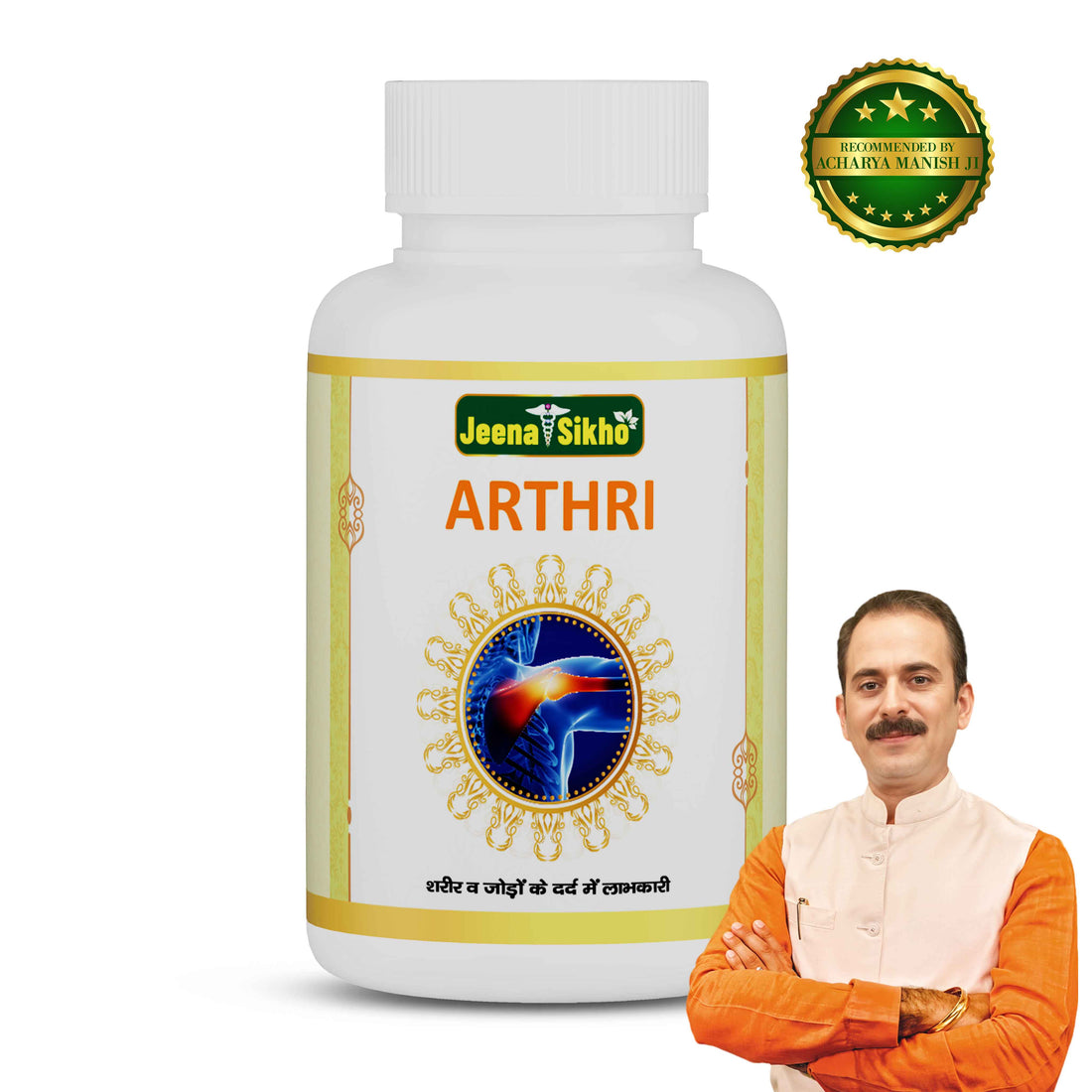
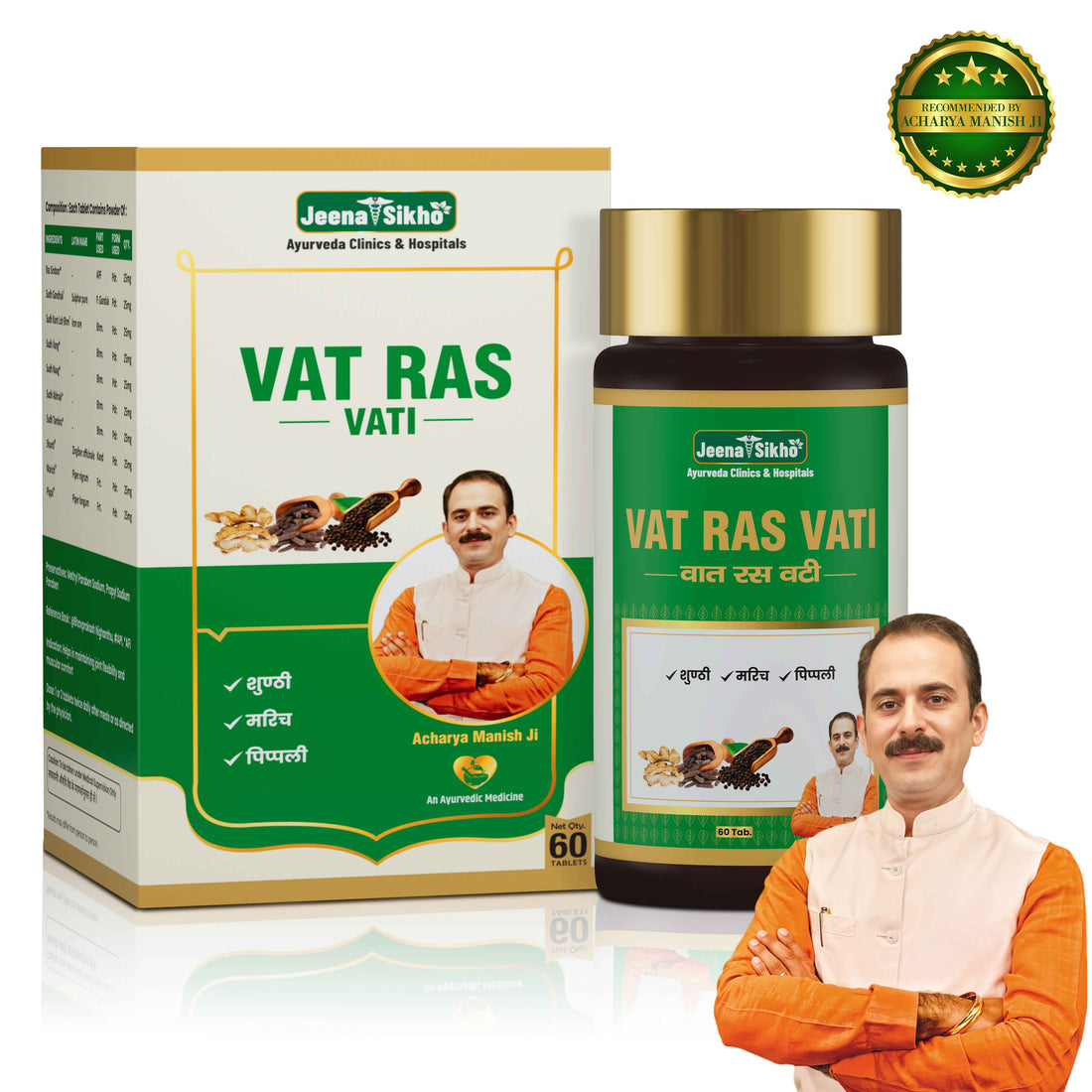
Ayurveda approaches joint pain as an imbalance of Vata, which governs movement and dryness in the body. This is why Vat Ras Vati is often used for Vata-type joint pain, while Maha Granthi Vati is recommended when stiffness and swelling dominate. For anyone looking for an effective Ayurvedic medicine for joint pain, combining an internal formulation like Arthri Capsules with a topical application of Sandhi Aarogya Oil tends to offer more complete support than relying on a single joint pain medicine alone, since one works from within and the other targets the area directly.
Knee Pain Causes Table:
Cause
|
What It Is
|
Ayurvedic Classification
|
Jeena Sikho Product
|
|
Osteoarthritis
|
Cartilage wear over time – most common in 45+
|
Sandhigata Vata — Vata in the knee joint causing dryness, stiffness, crepitus
|
Arthri Capsules + Vat Ras Vati + Go Flexi Tablet + Sandhi Aarogya Oil
|
|
ACL/Ligament Injury
|
Sudden twisting or impact tears ligament
|
Sandhi Sphutana — joint structural damage
|
Pain Nil Tablets (supportive) + HIIMS for surgical evaluation
|
|
Excess Body Weight
|
Each extra kg = 4kg knee pressure while walking
|
Medoroga affecting Sandhi — fat-related joint stress
|
Arthri Capsules + Go Flexi Tablet + dietary changes
|
|
Gout (Uric Acid)
|
Uric acid crystal deposits causing sudden severe pain
|
Vata-Rakta — blood-Vata disorder affecting small joints
|
Maha Granthi Vati (Shunti + Marich combination — thermogenic, uric acid support)
|
|
Tendinitis / Bursitis
|
Inflammation of tendons/bursa from overuse
|
Vata-Kapha Sandhi Shotha — inflammatory joint swelling
|
Pain Nil Tablets + Sandhi Aarogya Oil (topical Abhyanga)
|
Exercises for Knee Pain
A few targeted exercises for knee pain can be done at home without any equipment.
- Quad sets are a good starting point: simply tighten the thigh muscle while keeping the leg straight, hold for five seconds, and repeat ten times.
- This strengthens the muscles supporting the knee without putting any load on the joint itself.
- Straight leg raises take this further: lying down, lift the leg to about 45 degrees, hold briefly, then lower it slowly. Done consistently, this builds the quad strength that protects the knee joint over time.
For those who want a more complete workout, swimming or water walking offers zero-impact strengthening and pairs well with an internal formulation like Arthri Capsules for a more rounded approach to joint care. Step-ups on a low step can also help build knee stability, though this should only be attempted for mild to moderate pain, not during an active flare-up.
Joint Pain by Body Part
Not all joint pain behaves the same way, and the wrist, fingers, ankle, and elbow each tend to have their own patterns and causes.
Wrist joint pain is frequently linked to repetitive strain, especially from long hours of typing or phone use. Applying Sandhi Aarogya Oil directly to the area, along with Pain Nil Tablets for internal support, is a practical combination for this kind of overuse pain.
Finger joint pain often points to arthritis, and this is particularly common in women after menopause. One useful sign to watch for is morning stiffness that lasts more than thirty minutes, which is worth getting evaluated for rheumatoid arthritis rather than dismissing as normal ageing. Maha Granthi Vati, with its anti-inflammatory joint herbs, is commonly used for this kind of stiffness.
Ankle joint pain usually comes from either a sprain or underlying arthritis. For a fresh sprain, the RICE approach, rest, ice, compression, and elevation, remains the first line of care, while Sandhi Aarogya Oil is more suited to chronic, ongoing inflammation in the joint.
Elbow joint pain, which is referred to as tennis elbow or golfer's elbow, is caused by excessive strain on the arm and wrist muscles. The use of Pain Nil tablets internally and Sandhi Aarogya oil externally usually helps in curing both the pain and the inflammation.
Sciatica Pain — Causes, Symptoms & Ayurvedic Support
Sciatica pain occurs due to compression of the sciatic nerve, which runs from the lower back through the buttocks and into the legs. The pain may spread from the spine all the way to the foot via this path. Sciatica is usually caused by the condition of a slipped disc, which affects the nerve roots directly. Spinal stenosis, a natural narrowing of the spinal canal that comes with age, is another common trigger. In some cases, a muscle spasm in the buttock, known as piriformis syndrome, squeezes the nerve as it passes through, while spondylolisthesis, where a vertebra slips forward and pinches the nerve, is a less common but significant, sciatica pain causes. Prolonged sitting deserves special mention here too, since long desk hours place sustained pressure on the lower spine and are one of the biggest modern-day contributors to this condition.
The symptoms are usually hard to miss. Sharp, burning, or electric shock-like pain shooting down the leg, along with numbness and a feeling of weakness, are the classic signs of sciatica pain. For anyone searching for the best medicine for sciatica pain, Ayurveda offers a well-established route through Jeena Sikho's Sciatic Drops, a formulation created specifically for sciatic nerve and leg mobility support.
In classical Ayurvedic texts, sciatica is described as Gridhrasi, literally meaning vulture gait, a reference to the distinctive limping walk that patients develop. It is classified as a Vata disorder that affects the Grudhrasi Nadi, or the sciatic nerve pathway. The treatment approach follows two principles, Vata Shamana to calm the aggravated Vata dosha and Srotas Shodhana to clear and open the affected nerve channel. Sciatic Drops bring together a fast-absorbing liquid format with classical nerve-supporting herbs, making it one of the more practical options among sciatica pain medicines available today.
For those looking for sciatica pain treatment at home, a few simple habits go a long way. Gentle stretches such as the knee-to-chest stretch, piriformis stretch, and a seated spinal twist help ease pressure on the nerve. In the first 48 to 72 hours, cold therapy works best for reducing inflammation, after which switching to heat helps relax the surrounding muscles. It is worth noting that complete bed rest tends to worsen sciatica rather than help it, so gentle walking and movement should continue through recovery. Sitting posture matters just as much, and standing up every 30 to 45 minutes with proper lumbar support can prevent flare-ups. Alongside Sciatic Drops, an Abhyanga-style massage with Sandhi Aarogya Oil over the lower back and hip offers additional localised, Vata-pacifying support for long-term support.
Cervical Pain (Cervical Spondylosis) — Symptoms, Causes, Treatment & Exercises
Cervical pain, more formally known as cervical spondylosis, refers to neck pain that often radiates into the arm, caused by degeneration of the cervical spine. It develops from age-related disc wear, poor posture, or the prolonged screen time that has become common with desk jobs and constant phone use. The types of cervical pain can range from mild stiffness to more serious nerve involvement, and recognising the pattern early makes a real difference to how quickly it resolves.
Cervical pain symptoms typically start with neck stiffness that makes turning the head uncomfortable, followed by pain that radiates into the shoulder or arm. Headaches, particularly at the base of the skull, are common, and in more advanced cases, numbness or tingling in the hands can appear, signalling nerve compression that shouldn't be ignored.
For cervical pain treatment, Jeena Sikho's JS Spondy Drops were formulated specifically for this condition, as the name itself suggests, JS for Jeena Sikho and Spondy for spondylosis. In Ayurveda, this condition falls under Greeva Vata or Greeva Graha, a Vata disorder localised to the cervical region that causes pain, stiffness, and restricted neck movement. JS Spondy Drops use a fast-absorbing liquid format to deliver classical Vata-pacifying herbs directly to support the cervical canal, nerves, and surrounding muscles, making it a practical option for anyone asking how to cure cervical pain through a natural route.
Alongside internal support, a few cervical pain exercises can be done daily to ease stiffness and rebuild strength. Chin tucks, where the chin is gently drawn backwards and held for five seconds over ten repetitions, help correct the forward head posture that screen time tends to create. Slow and controlled stretching of the neck in both directions ensures its mobility, while squeezing shoulder blades helps to develop the muscles of the back responsible for the neck. Isometric exercises for the neck can be performed by using some kind of resistance when pressing the hand against it from different angles; this will help to strengthen the neck without affecting its joints.
Back Pain — Lower & Upper Back Causes, Best Exercises, Sleep Positions & Ayurvedic Support
Back pain is most commonly caused by muscle or ligament strain, a herniated disc, poor posture, or age-related arthritis. For immediate home support, apply Sandhi Aarogya Oil with a warm massage on the affected area, practise cat-cow stretches and pelvic tilts daily, sleep on your side with a pillow between the knees, and use Pain Nil Tablets for daily internal joint and muscle support. Avoid prolonged bed rest, since gentle movement actually speeds up recovery.
Among the many back pain reasons, muscle or ligament strain from a sudden movement or heavy lifting remains the most common acute cause. A herniated disc is another frequent culprit, pressing on a spinal nerve and often producing radiating pain similar to sciatica. Poor posture combined with a weak core is a slower-building cause, since prolonged sitting gradually weakens the muscles that support the spine, while osteoarthritis of the spine reflects age-related changes in the lumbar vertebrae. Upper back pain causes tend to differ slightly, often linked to the rounded shoulders, poor desk ergonomics, or tension carried in the shoulder blades.
The reasons why females suffer from back pain have their distinct patterns, too. Some of them include period pains that spread down to the lower back, the change in posture due to pregnancy, weak core muscles in the postpartum period, and a greater risk of osteoporosis after menopause. In this case, Asthi Poshak Vati, which includes Ashwagandha, Hadjod, and Shilajit ingredients, can be highly beneficial, as it is designed specifically to improve bone density in postmenopausal women at a greater risk of osteoporosis.
When it comes to back pain exercises, a few movements consistently help.
- The cat-cow stretch improves spinal flexion and extension while easing stiffness.
- Bird dog builds the core stability that protects the lower back.
- Pelvic tilts strengthen the deeper core muscles.
- Bridges build strength through the lower back and glutes together.
Sleep position plays a bigger role in back pain treatment than most people realise. The best sleeping position for back pain is on your side with a pillow placed between the knees, which keeps the spine aligned through the night. If you prefer sleeping on your back, placing a pillow under the knees helps preserve the natural lumbar curve. Stomach sleeping is best avoided altogether, as it flattens the lumbar curve and forces the neck into rotation, often worsening back and neck pain at the same time.
For sustained lower back pain treatment, Vat Ras Vati works well for Vata-type back pain, while Maha Granthi Vati, with its warming Shunti-Marich base, is suited to stiffness that worsens in cold weather, both pairing naturally with Pain Nil Tablets and regular Sandhi Aarogya Oil massage.
Neck Pain & Shoulder Pain — Causes, Best Pillow, Exercises & Ayurvedic Support
Neck pain is most commonly caused by poor posture, often called tech neck, along with muscle strain or cervical spondylosis, and it frequently occurs alongside shoulder pain in what is known as the cervico-brachial region. For fast support, apply Sandhi Aarogya Oil with a warm massage, use a proper pillow for neck pain support while sleeping, and take JS Spondy Drops for internal cervical nerve and muscle support. Gentle chin tucks and neck rotations done three times a day typically improve most posture-related neck pain within one to two weeks.
Neck pain causes range widely, from hours spent looking down at a phone or laptop to sleeping in an awkward position to underlying cervical spondylosis. Choosing the right pillow for neck pain makes a noticeable difference here, since a pillow that is too high or too flat forces the neck out of alignment for hours every night.
Shoulder pain follows a similar pattern but often has its own distinct causes depending on which side is affected. Right shoulder pain is frequently linked to overuse, poor posture, or referred pain from the neck, while causes of shoulder pain in females can also include frozen shoulder, which tends to occur more often in women, particularly around midlife.
A note on left shoulder pain: while left shoulder pain is usually musculoskeletal, arising from a rotator cuff strain or bursitis, it is important to know that left shoulder pain accompanied by chest pain, shortness of breath, jaw pain, or cold sweats needs immediate emergency medical attention, as these can be signs of a cardiac event. In such cases, never attempt self-treatment or apply oil to the shoulder, seek emergency care right away.
For everyday shoulder pain exercises, pendulum swings work well as a gentle starting point, leaning forward and letting the arm hang before swinging it in small circles. The cross-body stretch, where the arm is gently pulled across the chest and held for thirty seconds, loosens tight shoulder muscles, while wall climbs, walking the fingers up a wall, help gradually increase range of motion. Vat Ras Vati is a useful addition for Vata-type neck stiffness that tends to worsen in cold or windy weather.
Frozen Shoulder, Dislocations & ACL Injury — Symptoms, Treatment & Ayurvedic Recovery Support
Frozen shoulder typically develops in three stages. The freezing stage, which can last anywhere from six weeks to nine months, brings both pain and progressively worsening stiffness and responds well to twice-daily Sandhi Aarogya Oil Abhyanga along with Vat Ras Vati taken internally, following a warming, Vata-Kapha-pacifying approach. The frozen stage, which usually lasts between four to twelve months, often results in slight pain reduction while stiffness becomes increasingly severe; hence, a gentle range of motion exercises together with Arthri Capsules mobility support and Go Flexi Tablet are recommended. The thawing stage may last between six months and two years, where gradual motion becomes restored through the use of physiotherapy and Arthri Capsules.
In Ayurveda, the condition is referred to as Avabahuka, which actually translates to an arm that has gone up, reflecting the restricted and raised nature of the shoulder. The frozen stage, which usually lasts between four to twelve months, often results in slight pain reduction while stiffness becomes increasingly severe; hence, a gentle range of motion exercises together with Arthri Capsules mobility support and Go Flexi Tablet are recommended. The thawing stage may last between six months and two years, where gradual motion becomes restored through the use of physiotherapy and Arthri Capsules.
Dislocated shoulder and ACL injury symptoms are a different matter altogether. These are structural emergencies that call for immediate medical attention, imaging, and professional orthopaedic care and should never be self-treated. For such cases, connecting with Jeena Sikho HiiMS hospitals for proper evaluation is the right first step. Ayurvedic products have a meaningful role here too, but in supporting recovery and maintenance once acute treatment is complete, not in managing the structural injury itself.
Body Pain, Muscle Pain & Bone Pain — Causes, Differences & Ayurvedic Support
Body pain, muscle pain, and bone pain often get used interchangeably, but they point to different underlying issues and need different approaches to treat effectively.
Pain Type Differentiation Table:
Pain Type
|
How It Feels
|
Common Causes
|
Jeena Sikho Product
|
|
Full Body Pain
|
Widespread aching — often with fatigue
|
Viral infection (flu, dengue), Vitamin D deficiency, fibromyalgia
|
Pain Nil Tablets + Aloe Pain Relief Juice (anti-inflammatory support)
|
|
Muscle Pain (Myalgia)
|
Localised soreness, worse with movement
|
Overexertion, dehydration, viral, Vitamin D/magnesium deficiency
|
Pain Nil Tablets + Sandhi Aarogya Oil (topical muscle massage)
|
|
Bone Pain
|
Deep, constant, present at rest
|
Vitamin D deficiency, osteoporosis, fracture
|
Asthi Poshak Vati + Asthi Care Juice + Vitamin D supplementation
|
|
Joint Stiffness
|
Restricted movement — worst after rest
|
Arthritis, Vata aggravation, ageing
|
Arthri Capsules + Vat Ras Vati + Go Flexi Tablet + Maha Granthi Vati
|
A body pain tablet works best when the cause is systemic, such as a viral infection or fatigue-related ache spread across the body, which is why Pain Nil Tablets are often paired with Aloe Pain Relief Juice for its daily anti-inflammatory support. A muscle pain tablet, on the other hand, is more effective when combined with a topical application like Sandhi Aarogya Oil, since localised soreness responds well to direct massage alongside internal support.
Bone pain deserves particular attention because it often signals something more than simple fatigue. Unlike muscle soreness, it tends to be deep and constant, present even while resting, and is commonly linked to Vitamin D deficiency or the early stages of osteoporosis. This is where Asthi Poshak Vati becomes especially relevant as an ayurvedic medicine for bone strength. It brings together three of the most well-studied bone health herbs, Ashwagandha for nourishing bone tissue and reducing resorption, Hadjod, or Cissus quadrangularis, classically known as 'Asthi Shrinkhala' or the 'bone chain herb ', known to support bone healing and mineral density, and Shilajit, a mineral-rich Rasayana whose fulvic acid content helps the body absorb calcium more effectively. Together with Asthi Care Juice, this combination addresses osteoporosis treatment and bone strength from three angles at once: nourishment, structural repair, and mineral absorption, rather than relying on calcium alone.
All Jeena Sikho Ortho Care Products — Complete Ayurvedic Joint, Bone & Spine Range
Jeena Sikho's ortho care collection is built around fifteen distinct formulations, each grouped by the specific concern it addresses, so finding the right ayurvedic medicine for joint pain becomes far simpler.
General Joint Care, Arthritis & Mobility
This is the largest category and forms the foundation of daily joint wellness. Arthri Capsules offer classical support for arthritis, joint stiffness, and reduced range of motion. Vat Ras Vati is formulated for Vata-type joint pain, the dry, stiff, cracking discomfort that tends to show up with age. Pain Nil Tablets provide broad-spectrum support across joint pain, muscle aches, and general stiffness, while Go Flexi Tablets focus on daily flexibility for both joints and bones. Maha Granthi Vati rounds out this group with a warming formulation built on Shunti, Marich, and Vidanga for joint comfort and easier daily movement.
Bone Strength & Density
Asthi Poshak Vati stands as the dedicated bone care formulation in the range, combining Ashwagandha, Hadjod, and Shilajit, three of Ayurveda's most studied bone health herbs, to support bone strength, density, and joint comfort.
Daily Wellness Juices
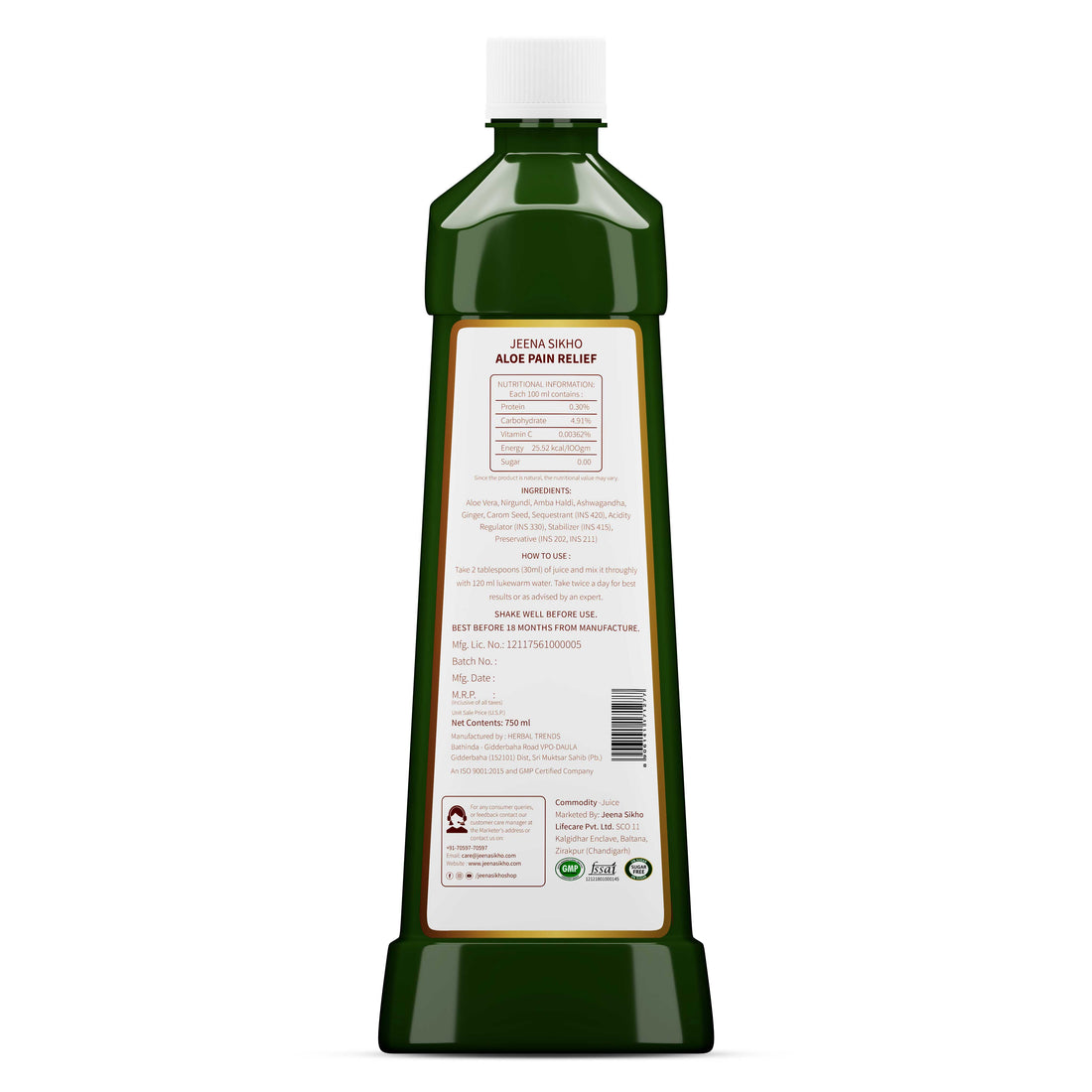
For those who prefer a daily tonic approach, Noni Dashmool Shakti Juice combines Noni with the classical ten-root Dashmool blend for ongoing joint strength. Asthi Care Juice is formulated with bone-nourishing herbs for long-term bone and joint support, while Aloe Pain Relief Juice offers a daily anti-inflammatory option built around Aloe for both joint and muscle wellness.
Targeted Nerve & Condition-Specific Formulas
Two products in the range are built for very specific conditions. Sciatic Drops are made for sciatic nerve pain and leg mobility, addressing the classical Gridhrasi pattern, while JS Spondy Drops target cervical spondylosis and neck pain through a fast-absorbing Greeva Vata formulation.
Varicose Veins & Leg Circulation
Varix Capsules support vein toning for varicose veins, spider veins, and leg heaviness, while JS Verico Drops offer a fast-absorbing liquid option for varicose veins and related leg pain.
Topical Oil
Sandhi Aarogya Oil is the collection's dedicated Abhyanga oil, made for direct application on the knee, back, shoulder, neck, or any area affected by joint pain.
Complete Protocol Kit
For anyone looking for the best ortho care solution in one place, the Joint Care Combo brings several of these formulations together into a complete ninety-day joint wellness protocol.
All Products — Quick Reference Table:
Sr.no
|
Product
|
Form
|
Concern
|
|
|
1
|
Joint Care Combo
|
Kit
|
Complete joint protocol
|
|
|
2
|
Noni Dashmool Shakti Juice
|
Juice
|
Joint strength + Vata
|
|
|
3
|
Arthri Capsules
|
Capsule
|
Joint care + mobility
|
|
|
4
|
Vat Ras Vati
|
Classical Vati
|
Vata-type joint pain
|
|
|
5
|
Pain Nil Tablets
|
Tablet
|
Joint + muscle + stiffness
|
|
|
6
|
Asthi Care Juice
|
Juice
|
Bone + joint strength
|
|
|
7
|
Aloe Pain Relief Juice
|
Juice
|
Joint + muscle pain
|
|
|
8
|
Asthi Poshak Vati
|
Tablet
|
Bone density — Ashwagandha + Hadjod + Shilajit
|
|
|
9
|
Varix Capsules
|
Capsule
|
Varicose veins + leg care
|
|
|
10
|
Sandhi Aarogya Oil
|
Topical Oil
|
Joint + muscle topical Abhyanga
|
|
|
11
|
Go Flexi Tablet
|
Tablet
|
Joint + bone mobility
|
|
|
12
|
JS Spondy Drops
|
Drops
|
Cervical + neck pain
|
|
|
13
|
Maha Granthi Vati
|
Classical Vati
|
Joint comfort + flexibility (Shunti + Marich)
|
|
|
14
|
JS Verico Drops
|
Drops
|
Varicose veins + leg pain
|
|
|
15
|
Sciatic Drops
|
Drops
|
Sciatica + sciatic nerve
|
|
Ayurvedic Science of Joint & Bone Health — Sandhi Roga, Asthi Dhatu & Key Herb Profiles
Ayurveda traces most joint and bone concerns back to a few core imbalances. Sandhigata Vata describes Vata accumulating within the joints, leading to the dryness, stiffness, crepitus, and pain that modern medicine recognises as osteoarthritis. Classical treatment for this pattern relies on Snehana or oleation therapy, combined with Vata Shamana to calm the aggravated dosha and Sandhi Poshana herbs to nourish the joint tissue itself.
Bone health is governed by what Ayurveda calls Asthi Dhatu, the body's bone tissue, considered the fourth Dhatu in the classical tissue framework. Healthy Asthi depends on balanced Vata for structural strength and adequate Meda, or fat and marrow tissue, to support it. When this tissue depletes, the resulting condition, Asthi Kshaya, is essentially what modern medicine identifies through osteoporosis treatment discussions, and it responds to Brimhana or nourishing therapy rather than depletion-focused approaches. This framework is also why Ayurvedic treatment for osteoporosis focuses heavily on tissue-building herbs rather than isolated calcium supplementation. Similarly, Gridhrasi corresponds to sciatica as a Vata disorder of the sciatic nerve pathway, while Greeva Vata or Greeva Graha describes the same Vata imbalance localised to the cervical region, causing cervical spondylosis.
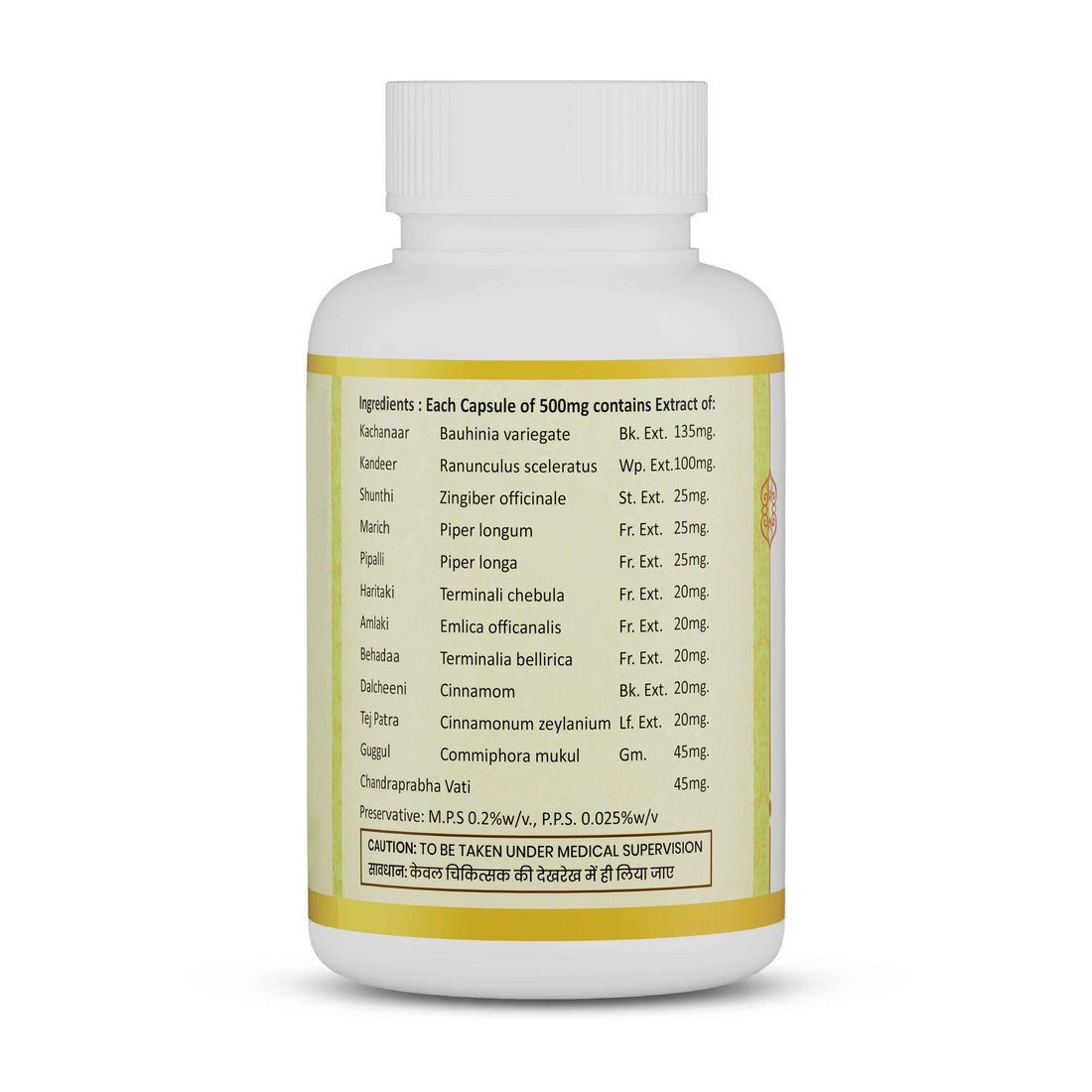
These classical concepts translate into specific, well-researched herbs. Hadjod, known as the bone chain herb' or 'Asthi Shrinkhala', has been studied for its ability to accelerate bone healing and increase bone mineral density. Ashwagandha supports bone tissue nourishment while helping reduce bone resorption markers, and Shilajit's fulvic acid and mineral content improve calcium absorption and joint cartilage nutrition, together forming the basis of an effective ayurvedic medicine for bone strength in Asthi Poshak Vati. Guggul brings anti-inflammatory, joint-swelling-reducing action to Arthri Capsules and Maha Granthi Vati, making it relevant wherever someone is looking for an ayurvedic medicine for arthritis. Dashmool's ten-root formula pacifies Vata broadly in Noni Dashmool Shakti Juice, Nirgundi targets nerve pain specifically for sciatica within the Sciatic Drops formulation, and the Shunti and Marich combination in Maha Granthi Vati improves circulation while easing inflammatory joint swelling.
Key Herb Profiles — Bridged to Products:
Herb
|
Key Action for Joints/Bones
|
Modern Evidence
|
Product Bridge
|
|
Hadjod (Cissus quadrangularis / Asthi Shrinkhala)
|
'Bone-chain herb' — classical Asthi Poshaka; accelerates bone healing, increases osteoblast activity, bone mineral density
|
Multiple studies confirm bone density increase + fracture healing acceleration
|
Asthi Poshak Vati
|
|
Ashwagandha (Withania somnifera)
|
Bone tissue Brimhana — reduces bone resorption, anti-inflammatory, anabolic for bone cells + muscle
|
Studies: reduces bone resorption markers, improves bone density and muscle strength
|
Asthi Poshak Vati
|
|
Shilajit (Mineral Rasayana)
|
Fulvic acid + 85+ minerals — enhances calcium absorption, bone matrix formation, joint cartilage nutrition
|
Improves calcium utilisation, reduces inflammatory joint cytokines
|
Asthi Poshak Vati
|
|
Guggul (Commiphora mukul)
|
Anti-inflammatory for joints — reduces synovial inflammation, Lekhana (scraping) action on Ama in joints
|
Boswellia-comparable anti-inflammatory; reduces joint swelling + pain
|
Arthri Capsules, Maha Granthi Vati
|
|
Dashmool (Ten Root Formula)
|
Classical Vata-pacifying formula — the 10-root combination is the most prescribed classical treatment for Vata-type pain
|
Comprehensive Vata Shamana — anti-inflammatory, analgesic, and nerve-protective
|
Noni Dashmool Shakti Juice
|
|
Nirgundi (Vitex negundo)
|
Vata-pacifying, anti-inflammatory, nerve pain support — specific for Gridhrasi (sciatica)
|
Anti-inflammatory compounds; topical and internal use for nerve pain
|
Sciatic Drops formulation
|
|
Shunti + Marich (Trikatu components)
|
Thermogenic Kapha-Vata Shamana — reduces inflammatory joint swelling, improves circulation
|
Anti-inflammatory, analgesic ginger alkaloids + piperine bioavailability
|
Maha Granthi Vati
|
Varicose Veins & Leg Circulation — Symptoms, Causes & Ayurvedic Vein Support
Varicose veins are swollen, twisted veins that appear most often in the legs, developing when weakened or damaged vein valves allow blood to pool and stretch the vein wall over time. Common symptoms of varicose veins that treatment seekers report include visible blue-purple twisted veins, a persistent heaviness and aching in the legs, swelling around the ankles and feet, discolouration of the skin near the vein, and, in more advanced cases, skin ulcers that need closer medical attention.
In Ayurveda, this condition is understood as 'Siragranthi', literally a nodule within the vein or channel, classified as a 'Vata-Kapha' disorder affecting the 'Rakta Vaha Srotas', the body's blood-carrying channels. The underlying issue is a disruption in Apana Vata, which governs downward blood flow, allowing blood to stagnate rather than circulate properly back up the legs. Classical treatment focuses on Sira Shodhana, or channel purification, paired with vein-toning herbs that restore strength to the vessel walls.
Jeena Sikho offers two dedicated formulations for this concern. Varix Capsules are suited to chronic, ongoing varicose vein management, working to strengthen the vein walls and support overall leg vascular health. JS Verico Drops offer a fast-absorbing liquid alternative for those who want quicker support from leg pain alongside varicose vein support. Both products work on the same Siragranthi pattern through classical, vein-supportive herbs, giving people a choice between a capsule and a drops format depending on what suits their routine.
When to See a Doctor for Ortho Conditions — Jeena Sikho HiiMS Hospital Integrated Care
While most everyday joint, muscle, and back discomfort responds well to consistent Ayurvedic care, certain symptoms need prompt medical evaluation rather than home management. Sudden, severe pain along with a visibly deformed joint could indicate a fracture or dislocation. Joint pain accompanied by fever, warmth, and redness may point to an infection. Back or neck pain paired with numbness or weakness in the limbs can signal nerve compression that needs proper diagnosis. Left shoulder pain occurring together with chest pain or shortness of breath is a medical emergency and requires immediate attention. Pain that hasn't improved after four to six weeks of consistent conservative care, and bone pain that persists at rest or follows even minor trauma in someone at risk of osteoporosis, are also signs it's time to consult a specialist.
For diagnosis, imaging such as X-ray or MRI, orthopaedic surgical evaluation, and structured physiotherapy, Jeena Sikho is associated with Jeena Sikho HiiMS hospitals, offering integrated spine and ortho-care hospital services. Jeena Sikho's fifteen-product ortho-care range is designed to support daily joint wellness, pain management, and bone strength, working alongside clinical care rather than replacing it for serious conditions. For anyone searching for an ortho care clinic or a joint pain doctor near me, Jeena Sikho HiiMS provides the professional consultation and treatment needed alongside this daily ayurvedic support.
Why Choose Jeena Sikho for Ayurvedic Ortho Care?
Joint pain shouldn't slow you down, and bone weakness shouldn't be something you simply accept with age. Jeena Sikho brings together India's most complete Ayurvedic ortho range, fifteen products covering more than twelve distinct pain conditions, each built on classical herb pedigrees like Dashmool, Hadjod, Guggul, Nirgundi, and the Vat Ras compound. From Sciatic Drops for radiating sciatic nerve pain to JS Spondy Drops for cervical concerns, Asthi Poshak Vati for bone density, and Sandhi Aarogya Oil for direct topical support, there is a targeted formulation for every concern across tablets, Vati, juices, drops, and oil. Begin your 90-day protocol with the Joint Care Combo, and for serious ortho conditions, connect with Jeena Sikho HiiMS.
FAQ's
Q1: What are the main causes of knee pain?
Knee pain is commonly caused by osteoarthritis (Sandhigata Vata, cartilage wear that comes with age), ligament injuries such as ACL or MCL tears, meniscus tears, excess body weight (every extra kilo adds roughly four kilos of pressure on the knees while walking), or gout. Arthri Capsules help in maintaining joint mobility and comfort for long-term knee problems, Vat Ras Vati deals with Vata kind of dryness and stiffness, and Sandhi Aarogya Oil provides topical Abhyanga treatment. In case of a fracture or a ligament tear, please contact Jeena Sikho HiiMS.
Q2: What causes sciatica pain and how is it treated?
Sciatica is caused by pinching of the sciatic nerve as a result of a herniated disc or spinal stenosis or piriformis muscle spasm, which results in pain travelling from the lower back down the hip and leg. According to Ayurveda, the name of sciatica is Gridhrasi, which means Vata disorder of the sciatic nerve. Sciatica Drops of Jeena Sikho are used to help with the sciatic nerve and leg mobility, and along with Sandhi Aarogya Oil, Abhyanga can be applied to the lower back and hip.
Q3: What is the best Ayurvedic medicine for sciatica?
Herbs commonly prescribed for sciatica or Gridhrasi are Nirgundi, owing to its anti-inflammatory properties and its ability to reduce Vata in the sciatic nerve; Guggul for joint inflammation, Ashwagandha for supporting nerve tissue, and Rasna due to its anti-inflammatory effect. Jeena Sikho's Sciatic Drops bring these classical herbs together in a fast-absorbing drops format built specifically for sciatic nerve and leg mobility support, available at Jeena Sikho Store..
Q4: What causes lower back pain in females
Female-specific causes include menstrual pain that radiates to the lower back, postural changes during pregnancy, core weakness in the months after childbirth, and post-menopausal osteoporosis linked to declining estrogen levels. Asthi Poshak Vati, with Ashwagandha, Hadjod, and Shilajit, is aimed specifically at maintaining bone density after menopause, while Pain Nil Tablets support daily pain release. If back pain occurs alongside menstrual irregularities, it is worth consulting both a gynaecologist and an orthopaedic specialist.
Q5: What is the best Ayurvedic medicine for joint pain?
Among the various medications available at Jeena Sikho, the following can be used to help with joint mobility and arthritis – Arthri Capsules; the treatment for Vata-type pain and dryness is Vat Ras Vati, while Pain Nil Tablets provide support from pain on a daily basis. Also, Maha Granthi Vati contains a combination of warming Shunti, Marich, and Vidanga for joint health. The Noni Dashmool Shakti Juice is an excellent choice for daily joint health intake, and Sandhi Aarogya Oil will be helpful for Abhyanga.
Q6: What is the best Ayurvedic oil for knee and joint pain?
Sandhi Aarogya Oil by Jeena Sikho is a classical joint and muscle oil made for direct Abhyanga application on the knees, back, shoulders, neck, or any affected joint. It contains Vata-pacifying herbs that penetrate the joint tissue, ease stiffness, improve circulation, and support the synovial membrane. For best results, apply it warm, massage gently for ten to fifteen minutes, and leave it on for about thirty minutes before bathing.
Q7: What causes joint pain all over the body?
Widespread joint pain can point to rheumatoid arthritis, an autoimmune condition affecting multiple joints symmetrically, viral infections such as dengue or chikungunya, which are common across India, fibromyalgia, Vitamin D deficiency, which is especially widespread in urban India, or generalised osteoarthritis. In Ayurveda, this pattern is known as Sarvanga Sandhi Vata, a generalised Vata aggravation, and responds well to Noni Dashmool Shakti Juice alongside Vat Ras Vati. If three or more joints are affected symmetrically with morning stiffness lasting over thirty minutes, it is worth getting evaluated for rheumatoid arthritis.
Q8: How to relieve frozen shoulder pain at home?
The best home remedy is Warm Sandhi Aarogya Oil Abhyanga to be applied twice a day, using a warming oil therapy that balances Vata and Kapha. Internally, Vat Ras Vati will help for Vata Shamana effect, while Arthri Capsules will support the mobility of the shoulder. Range-of-motion exercises like pendulum, climbing the wall, cross body movements can be helpful, and heating before exercise will help to loosen the shoulder capsule. Do not try forced movement because it may take six months up to two years to recover from this problem.
Q9: What is the best Ayurvedic medicine for arthritis?
'Sandhi Vata' is an Ayurvedic term that means 'arthritis', which includes classical herbs such as Guggul because of its anti-inflammatory effect on synovitis; Shallaki, or Boswellia, for mobility of the joint, Ashwagandha for pain and nutrition and Nirgundi for Vata Pacification. In Jeena Sikho’s range, there is an Arthri Capsule as the main medicine for arthritis, as well as Maha Granthi Vati, which includes a warm combination of Shunti and Marich and the classic compound Vat Ras Vati. Noni Dashmool Shakti Juice for daily nourishment of joints.
Q10: What are varicose veins and how does Ayurveda help?
Varicose veins are enlarged, twisted, visible veins in the legs that develop when the vein valves weaken, leading to leg heaviness, swelling, and visible blue-purple veins. In Ayurveda, this is called 'Siragranthi', a Vata-Kapha disorder affecting the Rakta Vaha Srotas or blood-carrying channels. Varix Capsules support vein wall strength and overall leg vascular health, while JS Verico Drops offer fast-acting liquid support for varicose veins and leg pain, both working on the same classical Siragranthi pattern.
Q11: What is Asthi Poshak Vati and why does it contain Hadjod?
Asthi Poshak Vati is Jeena Sikho's bone care tablet, combining Ashwagandha for bone tissue nourishment, Hadjod or Cissus quadrangularis for its bone healing and bone mineral density benefits, and Shilajit, a mineral-rich Rasayana with over eighty-five minerals that enhance calcium absorption. Hadjod holds a special place here as the most specific classical Ayurvedic bone herb, its Sanskrit name literally meaning that which joins or knits bone. It is often recommended for osteoporosis risk, general bone weakness, and post-fracture recovery support.
Q12: What is the best sleeping position for back pain?
Sleeping on the side and using a pillow between the knees ensures that the spine remains aligned and there is no extra pressure applied to the lower back. For patients who like to sleep on their back, using a pillow under the knees helps in maintaining the natural curvature of the lumbar spine. Sleeping on the stomach should be avoided because it causes flattening of the lumbar spine and also rotation of the neck, which leads to pain in the neck and lower back. The use of Pain Nil Tablets will help to manage pain and maintain healthy sleep posture.
Q13: Is cycling good for knee pain?
Riding a bicycle will help develop knee muscles, as it is not an impact exercise, unlike jogging, which puts stress on knees due to their joints being pounded. It is necessary to sit in the right posture with the leg being almost straight when reaching the lowest point during pedalling. Patients are not supposed to perform cycling when experiencing acute pain or after injury. This activity needs to be combined with Arthri Capsules and Sandhi Aarogya Oil rounds.
Q14: What is the Joint Care Combo and what does it include?
The Joint Care Combo is Jeena Sikho's complete joint wellness protocol kit, bringing together multiple complementary ortho products into a structured ninety-day joint support programme. It is designed for adults over thirty-five who want an all-in-one, structured approach to joint health, addressing inflammation and mobility support, bone nourishment, and topical care all at once. It is available at jeena sikho store.