

Nerve & Brain Care


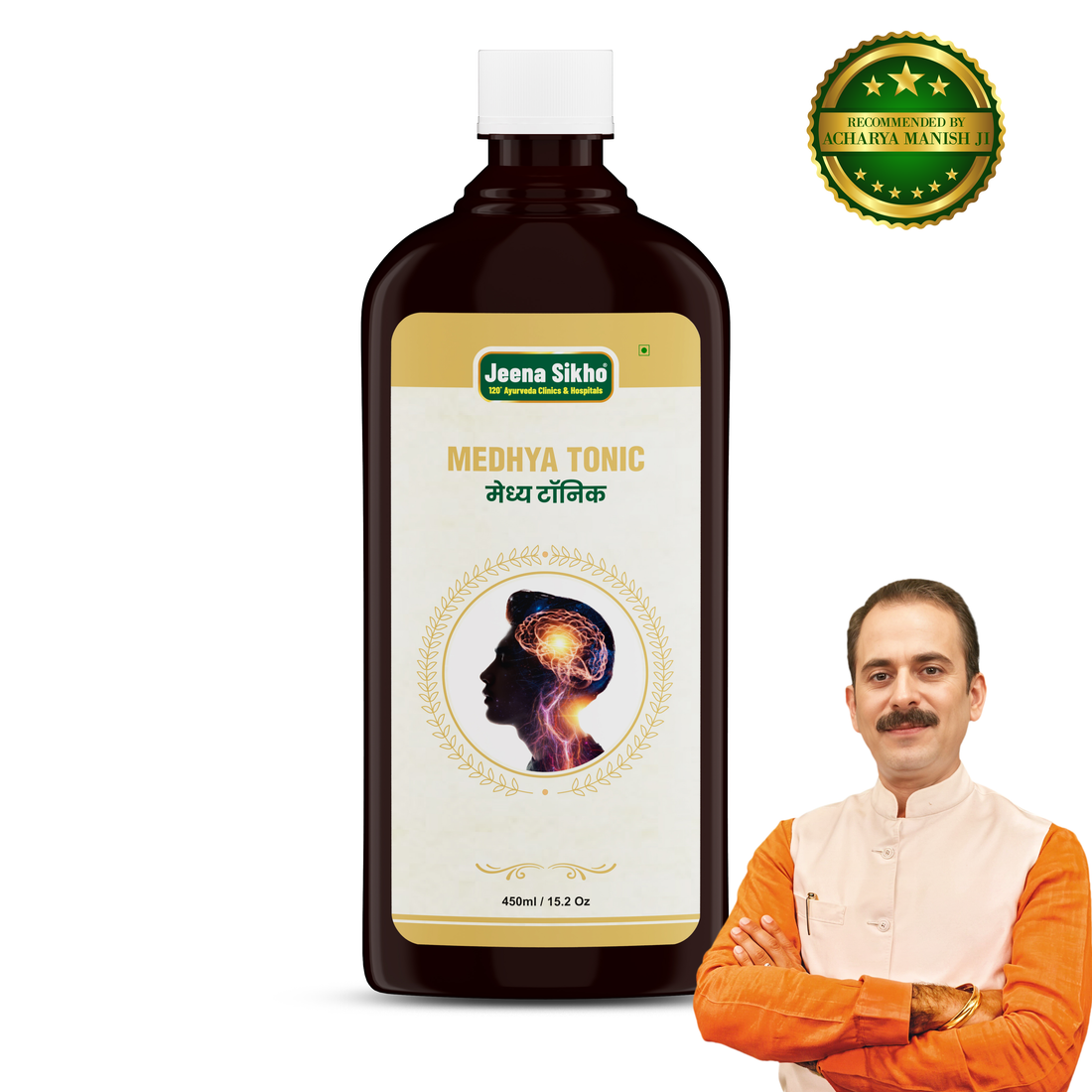
Medhya Tonic | Ayurvedic Brain Health, Memory, Focus & Sleep Support Syrup
Ayurvedic Brain & Nerve Care — Products for Memory, Stress, Sleep & Nerve Wellness
Brain care has become one of the biggest concerns for people living in a rapidly changing environment, where stress, poor sleep and constant mental pressure have started affecting mind and nerves like never before. Many people today search for an Ayurvedic medicine for brain health that can support their mental wellbeing without unwanted side effects, and this is where old Ayurvedic wisdom finds its true value.
Based on these Ayurvedic principles, Medhya Rasayana brings together some of the Ayurveda's most valued herbs, including Brahmi, Shankhpushpi, Ashwagandha, Jatamansi, and Tagara and is designed to support mental clarity, emotional balance, and calm nerves.
Jeena Sikho brings this wisdom together through products such as Dr. Sukoon Tablets, Medhya Tonic, Somni Veda Calm, Brahmi Tablets and Newrojs Drops, each one designed to support a different aspect of brain wellness — right from stress and sleep to memory, emotional balance and nerve wellness. For anyone looking for a gentle stress support medicine or an Ayurvedic brain tonic rooted in the classical Ayurveda, this collection offers a thoughtful starting point.
The Human Brain — Anatomy, Function & Serious Brain Conditions to Know About
The brain is truly one of the most complex organ that nature has ever design. Weighing just around 1.4 kg, it holds nearly 86 billion neurons, each one connected to thousands of others, forming something close to 100 trillion synaptic connections. Every second, the brain is processing over 11 million bits of sensory information, most of it happening without us even realising.
Different parts of the brain handle different jobs. The cerebrum takes care of thought, emotion, memory and the voluntary movement, while the cerebellum manages balance and coordination. The brainstem controls the most basic life functions like breathing and heart rate, and the limbic system is responsible for the emotion, stress response, fear and pleasure. The prefrontal cortex, which governs decision making, impulse control and personality, is often the part most affected by chronic stress.
Blood supply to the brain is also worth mentioning here — despite being only 2% of the total body weight, the brain receives close to 15-20% of the total cardiac output, which makes it one of the most blood demanding organ in the body. Even 4 to 5 minutes of disrupted blood flow can cause permanent neuron damage.
While daily brain wellness is something that can be supported through lifestyle and herbs, there are certain brain conditions that are medical emergencies and need urgent hospital care, not home management. Many people in India often search online for brain tumor ke lakshan or brain cancer ke lakshan the moment they notice something unusual, and similarly look up brain stroke causes or brain clot symptoms out of worry for a family member. Terms such as brain bleed symptoms and brain tumor treatment are also searched quite often, though such information found online should always be confirmed with a qualified doctor rather than relied upon on its own.
Serious Brain Conditions — Educational Overview:
Condition |
What It Is |
Key Symptoms |
When to Seek Help |
Medical Action |
|
Brain Tumour (60,500/mo) |
Abnormal cell growth in or around the brain — primary (brain origin) or secondary (metastatic from other organs) |
Persistent headaches (especially morning), seizures, vision changes, personality changes, memory loss, weakness on one side |
ANY of these symptoms — especially in combination — require urgent neurological evaluation |
MRI/CT scan, neurosurgeon consultation. Not an Ayurvedic self-care case. |
|
Brain Stroke (40,500/mo) |
Sudden interruption of blood supply to part of the brain — either blocked vessel (ischaemic, 85%) or ruptured vessel (haemorrhagic, 15%) |
FAST acronym: Face drooping, Arm weakness, Speech difficulty, Time to call emergency. Also: sudden severe headache, vision loss, confusion |
THIS IS A MEDICAL EMERGENCY. Call 112 immediately. |
Hospital within 4.5 hours for clot-busting treatment in ischaemic stroke. Every minute counts. |
|
Brain Bleed (14,800/mo) |
Bleeding inside or around the brain — from aneurysm rupture, trauma, or hypertension |
Sudden severe 'thunderclap' headache, vomiting, loss of consciousness, neck stiffness |
IMMEDIATE EMERGENCY — 112 / nearest hospital |
Neurosurgical evaluation — may require intervention |
|
Brain Clot (8,100/mo) |
Blood clot in brain blood vessels blocking circulation (thrombosis) or clot from elsewhere (embolism) |
Similar to stroke — FAST symptoms + headache, vision changes |
IMMEDIATE EMERGENCY |
Anticoagulation or surgical intervention under neurologist |
Brain tumour and brain stroke requires immediate specialist medical care — MRI, neurology consultation and hospital evaluation. These conditions are not managed with Ayurvedic home remedies. If you or someone known to you experience any of these symptoms, seeking emergency medical care immediately should be the only priority. Daily brain wellness support, stress management, memory support and nerve health are a separate concern altogether, and have nothing to do with neurological emergencies of this kind.
Depression — Symptoms, Causes, Types & How to Cope (Depression Ke Lakshan)
Depression is one of the most common mental health conditions today, but many people still misunderstand it and view it negatively. Many people search for depression ke lakshan or symptoms of depression without realising that what they are experiencing is actually a recognised medical condition, not a personal weakness. At the same time, many also look for information on how to cure depression and explore different options for therapy for depression to better understand the support available to them.
Depression symptoms include persistent sadness or empty feeling, loss of interest in activities once enjoyed, fatigue and low energy, changes in sleep (insomnia or sleeping too much), appetite changes, difficulty in concentrating, feelings of worthlessness or guilt, and in severe cases, thoughts of self harm. Depression is a medical condition — not a character weakness. It is treatable with professional support, therapy, and in some cases medication.
Types of Depression:
- Major Depressive Disorder (MDD) — low mood that stays for 2 weeks or more and starts affecting daily life.
- Dysthymia — a milder form but it stays much longer, sometimes for 2 years or even more.
- Seasonal Affective Disorder — depression that comes with the change in season, mostly seen in winter.
- Postpartum Depression — happens after childbirth, seen in 10-15% of new mothers, but many cases go unnoticed in India.
- Bipolar Disorder — mood keeps shifting between depression and phases of extreme high energy or mania.
Causes of Depression:
Causes of depression are usually a mix of neurochemical imbalance in the brain, difficult life events like grief or financial stress, chronic stress that damages the hippocampus over time, genetics, underlying medical conditions such as thyroid disorders, and growing social isolation in urban life.
Depression presents differently across the genders. Women more often experience sadness, guilt, anxiety and body aches, and these symptoms of depression in women may become more noticeable during perimenopause, postpartum and menstrual cycle changes. In men, it is frequently masked by anger, substance use or overworking, which is why signs of depression in men often go unnoticed for a long time. Both need equal attention and professional mental health support.
How to Deal with Depression:
Therapy for depression, especially Cognitive Behavioural Therapy, remains the most evidence based approach, along with medication when prescribed by a psychiatrist. Regular exercise, social connection and better sleep habits also plays an important role in how to overcome depression naturally. As a complementary wellness support alongside professional care, Ayurvedic herbs like Ashwagandha, Brahmi and Jatamansi may support emotional balance — Jeena Sikho's Dr. Sukoon Tablets and Vishtindukadi Vati are formulated with this purpose in mind, though they work best alongside, not instead of professional mental health treatment.
If you or someone you know is experiencing symptoms of depression, seeking timely guidance can help. HiiMS offers supportive consultations and personalized care approaches to help individuals understand their concerns and move towards better mental wellbeing.
Stress — Symptoms, Types, How to Reduce Stress Quickly & Ayurvedic Support
Stress has become such a common part of modern life that many people don't even realise how much it is affecting their body until the symptoms start showing up. Stress symptoms include stress headaches, muscle tightness, rapid heartbeat, shallow breathing, irritability, difficulty concentrating, insomnia, digestive issues, and fatigue. The reasons for stress are often linked to the body's fight-or-flight cortisol response being chronically activated by the modern life pressures, such as work deadlines, financial strain, relationship conflict, and the information overload. If you are wondering how to relieve stress quickly, simple techniques like deep breathing using the 4-7-8 method, splashing cold water on the face, taking a 5-minute brisk walk, or practising the Nadi Shodhana Pranayama may help calm the mind and body.
Types of Stress:
- Acute stress — It is a short term form of the stress that appears during challenging situations, such as exams or work pressure. It is normal and healthy in small doses.
- Chronic stress — It stays for weeks or months with cortisol staying high. It slowly damages the brain, heart and immune system.
- Episodic acute stress — It happens when acute stress episodes keep repeating often, usually seen in 'Type A' personality.
- Eustress — It is the positive stress that comes from excitement, challenge or growth — not all stress is harmful.
Stress Hormones — The Biology of Stress:
- Cortisol — the main stress hormone, rises with chronic stress, suppresses immunity, damages the hippocampus and promotes fat accumulation and blood sugar rise.
- Adrenaline (Epinephrine) — gives the immediate fight-or-flight response, raises heart rate, blood pressure and glucose.
- Noradrenaline — supports the sustained stress response, also gets linked to depression when it stays chronically depleted.
In Ayurveda, stress is mainly seen as Vata and Pitta aggravation. Vata creates anxiety, a racing mind, and insomnia, while Pitta leads to irritability, anger, and burnout. The Ayurvedic approaches, including stress support tablets made with the adaptogenic herbs like Ashwagandha, Brahmi, and Shankhpushpi, may help support the body's natural response to the stress. Ashwagandha is widely used to support the healthy stress response, Brahmi helps nourish the nervous system, and Shankhpushpi is traditionally known for its calming effect on the mind.
Stress Management Techniques — 6 Evidence - Based Methods:
Deep Breathing Exercises for Stress Release — 4-7-8 Technique or Nadi Shodhana Pranayama: Simply inhale for 4 counts, hold for 7 counts, and exhale for 8 counts. These deep breathing exercises for stress release can help your body relax in just 60 to 90 seconds and make you feel calmer.
- Exercise — 20-30 minutes of aerobic exercise reduces cortisol and raises endorphins. The fastest non-pharmacological way to reduce cortisol.
- Mindfulness + Meditation — 8-week MBSR (Mindfulness-Based Stress Reduction) reduces cortisol by 20-30% in studies. Even 10 minutes of daily practice helps.
- Social Connection — Isolation amplifies stress, and talking to someone trusted is one of the most effective ways to relieve acute stress.
- Sleep — 7-8 hours regulates the cortisol circadian rhythm. Sleep deprivation can double the cortisol levels.
Ayurvedic Adaptogen Protocol: Ashwagandha (most studied, reduces the cortisol by 11–32% in clinical trials), Brahmi (neuroprotective and helps reduce the anxiety markers), and Shankhpushpi (mind-calming and supports the healthy stress response) work together to support the emotional well being. Along with the home remedies for stress and anxiety such as meditation, proper sleep, and a balanced diet, Jeena Sikho's Stress Support Combo offers one of the most comprehensive Ayurvedic approaches. These Ayurvedic stress tablets are formulated to support relaxation, mental clarity, and the overall stress management naturally.
Memory, Concentration & Brain Power — Ayurvedic Brain Tonic & How to Sharpen Your Mind
Many people today look for an ayurvedic medicine for memory, brain tonic herbs, or a memory booster ayurvedic medicine, especially when they notice their focus slipping or forgetting things more often than before. To improve memory naturally: sleep 7-8 hours (memory consolidation happens during sleep), practice spaced repetition learning, exercise regularly (increases BDNF — brain-derived neurotrophic factor — the brain's growth hormone), reduce chronic stress (cortisol damages the hippocampus — the brain's memory centre), eat a brain-healthy diet (Omega-3, antioxidants, avoid excess sugar), and take Ayurvedic Medhya Rasayana herbs — Brahmi, Shankhpushpi, Ashwagandha — which are classically prescribed for cognitive support and are often considered among the best brain tonic ingredients used in the best brain tonic syrup formulations.
What Affects Memory and Concentration?
- Chronic stress: When cortisol stays high for long, it slowly shrinks the hippocampus, which directly lowers the memory capacity and also slows down how fast a person learns new things.
- Sleep deprivation: Proper memory consolidation needs good REM sleep, and even a single night of bad sleep can drop recall ability by almost 40%.
- Nutritional deficiencies: Low levels of Vitamin B12, iron, Vitamin D and Omega-3 all impairs how well the brain functions cognitively.
- Sedentary lifestyle: Staying physically inactive reduces the BDNF (Brain-Derived Neurotrophic Factor), which is basically the brain's own natural growth hormone, so the regular movement and exercise helps keep this hormone at a healthy level.
- Digital overload: Constant phone use and scrolling can make it harder for the brain to pay attention for long periods.
Medhya Rasayana — The Ayurvedic Cognitive Framework:
Medhya Rasayana (Medha meaning intellect or wisdom, and Rasayana meaning rejuvenation) is the Ayurvedic category of brain tonic herbs specifically used for enhancing the cognitive function, memory, focus and the mental clarity, making it an ayurvedic brain tonic for adults seeking daily cognitive wellness. Charaka Samhita describe four primary Medhya herbs — Brahmi, Shankhpushpi, Mandukparni and Guduchi — which together provides comprehensive brain nourishment, from synaptic support to neuroprotection and are often regarded as the best ayurvedic medicine for brain support in traditional Ayurveda.
Medhya Rasayana-Based Products for Daily Brain Wellness
- Medhya Tonic — Ayurvedic Brain Tonic (Memory & Focus): This is the flagship tonic in a classical syrup format, bringing together traditional Medhya Rasayana herbs for supporting daily cognitive wellness. It suits students, working adults, elderly people dealing with cognitive concerns, and basically anyone who wants the best brain tonic for students or the best brain tonic for adults as part of their routine.
- Memory Support Tablets (Concentration, Brain Sharpness & Stress): A multi-concern tablet that addresses memory, concentration, sharpness and stress all together, making it useful for people who are dealing with more than one brain related concern at once and looking for the best Ayurvedic medicine for memory and concentration.
- JS Brain Tone Capsules (Memory & Stress Support): These capsule works on both memory and stress simultaneously, giving it a dual-action approach that tones the brain while also helping manage stress levels. It can be considered a brain booster Ayurvedic medicine for daily cognitive support.
- Brahmi Tablets (Memory, Focus & Brain Support): Made from a single herb, Brahmi remains the most studied Ayurvedic nootropic till date, backed by more than 20 clinical trials that confirms its benefit for memory and overall cognitive function, making it a popular Ayurvedic medicine for brain power.
- JS Brain Drops (Memory, Focus & Mental Clarity): Available in a liquid form, these drops are designed for fast absorption of the Medhya herbs, supporting memory, focus and mental clarity more quickly than tablet based options.
Sleep Disorders & Insomnia — How to Sleep Better & Ayurvedic Sleep Support (Nidra Rasayana)
Sleep is one of the most neglected part of health today, and yet it plays such a big role in how the brain functions. Many people suffering from insomnia or a general sleep disorder often search for an ayurvedic medicine for sleep hoping to find something gentle that helps them rest better without becoming dependent on it. To sleep better naturally: maintain a consistent sleep-wake schedule (same time daily — even weekends), dim lights and avoid screens 1 hour before bed, keep the bedroom cool (18-20°C), practise 10 minutes of Yoga Nidra or deep breathing, avoid caffeine after 2 PM, and take Ayurvedic Nidrajanana (sleep-promoting) herbs: Tagara (Valerian alternative), Jatamansi (calming nerve herb), and Ashwagandha (adaptogen that normalises cortisol for restful sleep).
Why Sleep Matters for Brain Health:
- The brain's glymphatic system clears out toxic protein waste, including amyloid beta, which is linked to Alzheimer's, and this only happens during deep sleep, making it the brain's nightly detox process.
- Memory consolidation also takes place during the REM sleep, so poor sleep directly impairs learning and recall ability.
- Chronic sleep deprivation raises the cortisol levels, increases the risk of depression, and impairs prefrontal cortex function responsible for decision making and impulse control.
- India is facing a real sleep crisis too, with the average adult sleeping only around 6.5 hours a night, which fall well below the recommended 7-9 hours.
For anyone wondering how to sleep fast or how to get deep sleep, small consistent habits usually works better than one big change, and even learning how to fix sleep schedule gradually can bring noticeable improvement over a few weeks. People often look for the best Ayurvedic medicine for sleep or specifically an Ayurvedic medicine for deep sleep, and depending on whether the issue is a mild sleep disorder or something rooted more in stress, Ayurveda offers different combinations of herbs suited to each case. For those managing a diagnosed sleep disorder, an Ayurvedic medicine for sleep disorder formulated with classical herbs may support the process gently over time, alongside professional guidance where needed.
Ayurvedic Sleep Support Products:
- Somni Veda Calm Capsules brings together classical Nidrajanana, or sleep-promoting, herbs along with calming ingredients — the name itself comes from 'Somni' meaning sleep and 'Veda' meaning classical wisdom, and works well for people struggling with a restless mind at bedtime or general difficulty falling asleep.
- Dr. Sukoon Tablets, where 'Sukoon' simply means peace, serves a dual purpose by supporting both sleep and stress together, making it a suitable choice as an ayurvedic medicine for good sleep for those where stress is the main reason behind disturbed sleep in the first place.
Nerve Health, Neuropathy & Nerve Weakness — Ayurvedic Nerve Wellness Support
Nerve related problems are becoming more common these days, and many people start searching for nerve tablets or nerve weakness tablets when they experience tingling, numbness or weakness in their hands and feet. Understanding the cause can help in choosing the right support, including lifestyle changes, medical care or ayurvedic medicine for neuropathic pain.
What Is Neuropathy? Types & Causes
- Peripheral neuropathy happens when nerves outside the brain and spinal cord get damaged, leading to tingling, numbness and burning pain in the hands and feet, and this is most commonly seen in diabetics.
- Diabetic neuropathy occurs when high blood sugar damages the small blood vessels that supply the peripheral nerves, causing progressive sensory loss, pain and eventually problems with autonomic function too. A proper diabetic neuropathy treatment always starts with strict blood sugar control as the primary step.
- Cervical neuropathy comes from nerve compression due to cervical spondylosis, which causes neck pain, arm pain that radiates down, and tingling in the hand.
- Sciatic neuropathy, on the other hand, is caused by compression of the sciatic nerve, leading to radiating leg pain that Ayurveda refers to as Gridhrasi.
In Ayurveda — Vata and the Nervous System
Vata governs all nerve functions in Ayurveda, including movement, sensation, and nerve impulses, so most neuropathic conditions are considered Vata Vyadhi (Vata-origin disease). Nerve weakness (Dhatukshaya) develops when excess Vata occurs without adequate Ojas (vital essence) or Mamsa Dhatu (muscle and nerve tissue) nourishment. Ayurveda focuses on nourishing and balancing Vata through Brimhana (nourishing), Vata Shamana, and specific Medhya-Nadi (nerve-nourishing) herbs, including options used as mind relax medicine, mind relax tablet names, and Ayurvedic medicine for nerve pain. Newrojs Drops address this pattern with classical mind-nerve support herbs.
Nerve Support Products
- Newrojs Drops, whose name comes from combining "Neuro" and "JS," brings together classical nerve supporting herbs in a fast absorbing drop format, useful for peripheral nerve discomfort, general nerve weakness and neuropathic pain support.
- Sciatic Drops is formulated specifically for sciatic nerve pain and leg mobility, addressing what Ayurveda calls Gridhrasi.
- JS Spondy Drops targets cervical nerve compression and neck pain, working on what is described as Greeva Vata in classical texts.
Ayurvedic Science of the Brain — Medhya Rasayana, Sadhaka Pitta & the Mind-Consciousness Framework
Ayurveda has always looked at mind and brain as two connected but separate things.
- Manas, or the mind, is described as the seat of consciousness, thought and emotion, governed mainly by two gunas — Rajas, which brings activity and passion, and Tamas, which brings inertia and dullness. Sattva, the state of clarity, is considered the ideal balance. Excess Rajas often show up as anxiety, while excess Tamas leads to dullness. This is where brain herbs Ayurveda comes into picture, since Medhya Rasayana herbs work to increase Sattva while reducing Rajas and Tamas.
- Sadhaka Pitta, the sub-dosha residing in heart and brain, is responsible for intelligence and how well a person processes emotions. When impaired, it results in poor decision making, and this is why a good Ayurvedic brain tonic or best brain tonic in Ayurveda, usually includes herbs like Brahmi and Shankhpushpi.
- Prana Vata governs sensory intake and the mind-brain connection. Disturbed Prana Vata causes racing thoughts and insomnia, and brain tonic herbs like Ashwagandha and Jatamansi help calm this Vata. Together, these concepts form the base on which most Ayurvedic medicine for the brain is built, drawing from Charaka Samhita rather than modern assumptions alone.
Key Medhya Herb Profiles:
Herb |
Ayurvedic Classification |
Key Brain Action |
Modern Evidence |
Product Bridge |
|
Brahmi (Bacopa monnieri) |
Medhya Rasayana #1 — 'Brahmi' = that which expands Brahman (consciousness) |
Bacosides improve synaptic transmission, enhance memory consolidation, reduce anxiety, neuroprotective against oxidative stress |
20+ RCTs: improves memory, attention, and information processing speed — most studied Ayurvedic nootropic |
Brahmi Tablets + JS Brain Tone Capsules + Medhya Tonic |
|
Shankhpushpi (Convolvulus pluricaulis) |
Medhya Rasayana #2 — 'Shankhpushpi' = conch-flower herb |
Reduces cortisol, calms the nervous system, improves cognitive function, reduces anxiety and mental fatigue |
Studies confirm anxiolytic (anti-anxiety), memory-enhancing, and antidepressant-like effects |
Memory Support Tablets + Medhya Tonic + Dr. Sukoon Tablets |
|
Ashwagandha (Withania somnifera) |
Balya (strength) + Medhya + Rasayana — Vata-Kapha pacifying adaptogen |
Reduces cortisol by 11-32% in trials, neuroprotective, anti-anxiety, improves sleep onset, memory, and stress resilience |
Multiple RCTs: cortisol reduction, cognitive improvement, sleep quality, anxiety reduction |
Dr. Sukoon Tablets + Stress Support Combo + Somni Veda Calm |
|
Jatamansi (Nardostachys jatamansi) |
Nidrajanana (sleep-inducing) + Medhya — classical mind-calming herb |
Calms the nervous system, promotes sleep without sedation, reduces anxiety, neuroprotective |
Studies: sedative + anxiolytic properties through GABAergic mechanism (natural GABA precursor activity) |
Somni Veda Calm Capsules + Dr. Sukoon Tablets |
|
Tagara (Valeriana wallichii) |
Nidrajanana — primary Indian sleep herb, botanical relative of Western Valerian |
Promotes sleep onset, reduces sleep latency, calms Vata in the nervous system |
Indian Valerian — studies confirm sleep-promoting and anxiolytic activity |
Somni Veda Calm Capsules |
|
Mandukparni (Centella asiatica / Gotu Kola) |
Medhya Rasayana #3 — 'Mandukparni' = frog-leaf herb |
Improves cerebral circulation, enhances nerve repair (neurotrophic), cognitive enhancement, reduces anxiety |
Studies: nerve regeneration support, cognitive improvement, reduced anxiety and depression markers |
Medhya Tonic + Memory Support Tablets |
All Jeena Sikho Brain Care Products — Ayurvedic Support for Memory, Stress, Sleep & Nerve Health
Jeena Sikho's complete brain care range brings together products across five categories, each one build around classical Ayurvedic herbs and formulated for a specific concern. Whether someone is looking for an Ayurvedic medicine for brain health, a gentle stress support medicine, or even an Ayurvedic medicine for anxiety, the range is designed to cover most everyday mind and nerve related needs.
Category 1 — Brain Tonics & Memory Support:
- Medhya Tonic — Ayurvedic Brain Tonic, Memory & Focus: This tonic combines Medhya Rasayana herbs like Brahmi, Shankhpushpi, Mandukparni and Guduchi to support memory, focus and daily brain health. It is suitable for students, working adults and older adults, making it one of the best brain tonic for adults in the range.
- Memory Support Tablets — Concentration, Brain Sharpness & Stress: A multi-concern tablet that addresses memory, concentration, sharpness and stress together in one formulation.
- JS Brain Tone Capsules — Memory & Stress Support: These capsules work on both memory and stress at once, giving a dual-action toning effect for the brain.
- Brahmi Tablets — Memory, Focus & Brain Support: Made from a single herb, Brahmi remains the most studied Ayurvedic nootropic, backed by over 20 clinical trials confirming its role in memory and cognitive function.
- JS Brain Drops — Memory, Focus & Mental Clarity: Available in drop form, these are meant for fast absorption, supporting memory, focus and mental clarity quicker than tablets.
Category 2 — Stress Management & Emotional Wellness:
- Stress Support Combo — Complete Stress Wellness Kit: This combo brings together multiple products to support stress release and overall well being.
- Dr. Sukoon Tablets — Sleep, Stress & Relaxation: With 'Sukoon' meaning peace, this tablet serves a dual purpose, supporting both sleep and the stress management.
- Vishtindukadi Vati — Mind, Memory & Stress Management: A classical Vati compound that supports mind wellness, memory and stress all together.
Category 3 — Sleep & Deep Relaxation:
- Somni Veda Calm Capsules — Relaxation & Sleep Support: Formulated with the classical Nidrajanana herbs such as Tagara, Jatamansi and Ashwagandha, these capsules help promote relaxation and better sleep.
Category 4 — Head Comfort & Mental Clarity:
- Dr. Migra XS Tablets — Head Comfort, Stress & Mental Clarity: Designed for head discomfort, including migraine support, along with the stress and mental clarity concerns.
Category 5 — Nerve Health & Neuropathy:
- Newrojs Drops — Mind & Nerve Health: These drops target both nerve wellness and mind health together, making them useful for people who want support in both areas at once.
- Sciatic Drops — Sciatic Nerve & Leg Mobility: Formulated for the sciatica and sciatic nerve discomfort, it also supports better leg mobility over time.
- JS Spondy Drops — Cervical & Neck Pain: Aimed at the cervical nerve concerns and neck pain release, especially for people who spend long hours sitting or working on screens.
All Products — Quick Reference Table:
Sr.no |
Product |
Form |
Concern |
|
|
1 |
Stress Support Combo |
Kit |
Complete stress protocol |
|
|
2 |
Dr. Sukoon Tablets |
Tablet |
Sleep + stress + relaxation |
|
|
3 |
Memory Support Tablets |
Tablet |
Memory + concentration + brain sharpness |
|
|
4 |
Dr. Migra XS Tablets |
Tablet |
Head comfort + stress + mental clarity |
|
|
5 |
JS Brain Tone Capsules |
Capsule |
Memory + stress |
|
|
6 |
Vishtindukadi Vati |
Classical Vati |
Mind + memory + stress |
|
|
7 |
Somni Veda Calm Capsules |
Capsule |
Relaxation + sleep |
|
|
8 |
Brahmi Tablets |
Tablet |
Memory + focus + brain |
|
|
9 |
JS Spondy Drops |
Drops |
Cervical + neck pain (cross-collection) |
|
|
10 |
JS Brain Drops |
Drops |
Memory + focus + mental clarity |
|
|
11 |
Sciatic Drops |
Drops |
Sciatica + sciatic nerve (cross-collection) |
|
|
12 |
Newrojs Drops |
Drops |
Mind + nerve health |
|
|
13 |
Medhya Tonic |
Tonic |
Brain tonic + memory + focus |
|
Stress-Relieving Foods, Brain-Healthy Diet & Daily Wellness Protocol for Mental Clarity
Along with lifestyle changes, certain stress relieving foods and home remedies for stress and anxiety can also support the body in staying calm through the day.
Top Stress-Relieving Foods
- Dark chocolate (70%+) — flavanols helps reduce cortisol and adrenaline; 20-30g daily is enough
- Blueberries and Jamun — anthocyanins protects against stress-induced neural inflammation, and are among the good foods that reduce stress
- Avocado and walnuts — Omega-3 fatty acids are the brain's structural building block, and helps reduce neuroinflammation
- Ashwagandha (as food/supplement) — one of the most studied cortisol-reducing adaptogen; 300-600mg daily
- Turmeric milk (Golden Milk) — curcumin cross the blood-brain barrier and reduce neuroinflammation
- Banana — contains magnesium, tryptophan (a serotonin precursor) and B6, giving natural mood and energy support
- Green tea — L-theanine promotes a calm-alert state through alpha brain waves, without causing drowsiness
- Curd and other fermented foods — connects to the gut-brain axis, since probiotics influences serotonin production, and almost 90% of serotonin gets produced in the gut, not the brain
Daily Brain Wellness Protocol
Knowing how to relieve stress quickly often comes down to following a simple daily routine.
- In the morning, Medhya Tonic or JS Brain Drops along with 10 minutes of Pranayama (Nadi Shodhana) and some sunlight exposure helps raise serotonin naturally — this is also one of the simplest deep breathing exercises for stress release a person can build into their day.
- During the day, Memory Support Tablets, regular breaks from screen (following the 20-20-20 rule), physical movement and social interaction all play their part.
-
In the evening, Dr. Sukoon Tablets or Somni Veda Calm, a light dinner, and avoiding screens for at least 1 hour before bed rounds off the protocol.
Why Choose Jeena Sikho HiiMS for Ayurvedic Brain Care?
Your mind is truly the most valuable asset, and just like any other organ, it needs consistent, targeted nourishment to function well over the years. Jeena Sikho brings the classical Medhya Rasayana science into modern daily life, from Brahmi Tablets for memory to Somni Veda Calm for restful sleep, and from the Stress Support Combo for emotional resilience to Newrojs Drops for nerve wellness. Start your daily brain care ritual today with Medhya Tonic, which stand as Ayurveda's answer to the demand of the modern mind.
- India's most complete Ayurvedic brain and nerve care range, offering products that covers stress, sleep, memory, nerve health, head comfort and emotional wellness all together
- Built on the classical Medhya Rasayana framework — Brahmi, Shankhpushpi, Ashwagandha, Jatamansi and Tagara — herbs that is backed by references from Charaka Samhita
- Targeted formulations for specific concern, such as Sciatic Drops for sciatica, JS Spondy Drops for cervical discomfort, and Newrojs Drops for nerve wellness
FAQ’s
Q1: What is the best Ayurvedic medicine for brain health?
Ayurveda relies mainly on Medhya Rasayana herbs for brain health. Brahmi is the most researched, backed by 20+ trials for memory. Shankhpushpi supports mental clarity and eases stress, Ashwagandha lowers cortisol and protects nerve cells, Jatamansi aids sound sleep, and Mandukparni supports nerve regeneration. Jeena Sikho's Medhya Tonic is one of the key products in the range, along with Brahmi Tablets, Memory Support Tablets, JS Brain Tone Capsules and JS Brain Drops.
Q2: What is Medhya Rasayana in Ayurveda?
Medhya Rasayana combines two words, Medha meaning intellect, and Rasayana meaning rejuvenation. It is a group of Ayurvedic herbs meant to nourish the brain and support memory, focus and mental clarity. Charaka Samhita names four primary herbs, Brahmi, Shankhpushpi, Mandukparni and Guduchi, each bringing its own benefit. Jeena Sikho's Medhya Tonic and Memory Support Tablets are built on this classical framework.
Q3: What are the symptoms of depression?
Depression usually shows as a lasting sadness or emptiness that stays two weeks or more, along with losing interest in things once enjoyed. Fatigue, disturbed sleep, appetite changes, trouble concentrating, and feeling worthless are the common signs, and in severe cases, thoughts of death or self-harm can occur. Since depression is a genuine medical condition, anyone noticing these symptoms should speak to the psychiatrist. Herbs can only offer complementary emotional support.
Q4: How to deal with depression naturally?
Alongside professional treatment, certain natural habits can support mental wellbeing. Regular aerobic exercise is considered most evidence-backed, sometimes working almost as well as medication in mild cases. A steady sleep routine, staying socially connected, cutting alcohol, sunlight exposure, and practising mindfulness also help. Herbs like Ashwagandha for the cortisol reduction, Brahmi for neuroprotection, and Shankhpushpi for calming may provide balance, but these never replace the psychiatric care in clinical depression.
Q5: What are the best stress management techniques?
Effective stress management techniques include deep breathing like the 4-7-8 technique or Nadi Shodhana Pranayama, which calm the nervous system within a minute. Daily exercise for 20-30 minutes, along with 10 minutes of mindfulness meditation, has been shown to lower cortisol by 20-30% over 8 weeks. Staying socially connected and sleeping for 7-8 hours matters too much. Ashwagandha reduces the cortisol by 11-32%, and Jeena Sikho's Stress Support Combo brings such adaptogens together.
Q6: How to improve memory and concentration naturally?
Improving memory naturally starts with sleeping 7-8 hours, since memory consolidation happens during the REM sleep. Regular exercise raises BDNF, the brain's growth hormone, while reducing chronic stress protects the hippocampus from cortisol damage. Eating Omega-3 rich foods and practising spaced repetition also helps. Brahmi Tablets, the most studied with over 20 trials, along with the Medhya Tonic and JS Brain Drops, support memory and focus daily.
Q7: What is the best Ayurvedic medicine for sleep?
Ayurveda classifies certain herbs as Nidrajanana, meaning sleep-inducing, and Tagara or the Indian Valerian, is one of the most well-known. Jatamansi calms nerves through GABAergic action, and Ashwagandha helps by normalising the cortisol for restful sleep. Jeena Sikho's Somni Veda Calm Capsules, combining Tagara and Jatamansi, are formulated for sleep support, while Dr. Sukoon Tablets work on sleep and stress together, taken before bed with milk.
Q8: What is the best Ayurvedic medicine for anxiety?
For mild anxiety and stress, herbs such as Ashwagandha, the most studied for lowering cortisol, Brahmi, which is anxiolytic, Shankhpushpi, which calm the nervous system, and Jatamansi, which works through GABAergic pathway, are traditionally used. These are only supportive for mild cases, actual anxiety disorder needs professional evaluation. Jeena Sikho offers Dr. Sukoon Tablets, the Stress Support Combo, and Vishtindukadi Vati for this purpose.
Q9: What is the benefit of the Brahmi Tablets?
Brahmi, known as Bacopa monnieri, is the most clinically studied nootropic herb in Ayurveda, with more than 20 trials backing its use. Research links it to improved memory recall, faster processing, reduced anxiety, and protection against oxidative stress, plus support for attention in children with ADHD, under physician guidance. Its active bacosides work by enhancing synaptic activity in the hippocampus. Brahmi Tablets offer this benefit.
Q10: What are the symptoms of a brain stroke?
The easiest way to remember stroke symptoms is FAST: Face drooping on one side, Arm weakness, Speech that becomes slurred, and Time, meaning call 112 immediately. Other warning signs include a sudden severe thunderclap headache, sudden vision loss, confusion, or loss of coordination. Brain damage can turn irreversible within 4-6 hours if untreated, so every minute matters and this is a medical emergency.
Q11: What is the Medhya Tonic — who should take it?
Jeena Sikho Medhya Tonic is a brain tonic, made in liquid form using classical Medhya Rasayana herbs for memory, focus and cognitive wellness. It suits students preparing for exams, working adults with mental fatigue, the elderly wanting daily brain nourishment, and anyone facing stress-related mental fog.
Q12: What are Newrojs Drops and who should use them?
Newrojs Drops, whose name combines Neuro for nerve and JS for Jeena Sikho, are formulated using nerve-supporting herbs for peripheral nerve health, mind wellness and neuropathic comfort. They suit people dealing with nerve weakness, discomfort from peripheral neuropathy, or those wanting mind-nerve support, including as wellness aid for diabetic neuropathy alongside medical treatment.


